In the evolving world of sales operations, whether it’s revops or growth ops, the core mission remains consistent: empower and streamline. It’s about crafting a seamless pathway that allows sales reps to do what they do best: sell.
Forrester has highlighted a staggering fact: sales reps expend 77% of their precious time on non-selling tasks. Imagine if most of that could be automated!
The real job of salespeople?
It’s selling, not getting bogged down with manual tasks and CRM upkeep.
In this article, we discuss the impact of AI and automation on today’s sales processes. We look at how these technologies simplify tasks and allow salespeople to concentrate on selling.
A key point is the importance of documenting your outbound playbooks, which significantly enhances sales strategy and execution
Embracing AI & Automation: The Future is Now
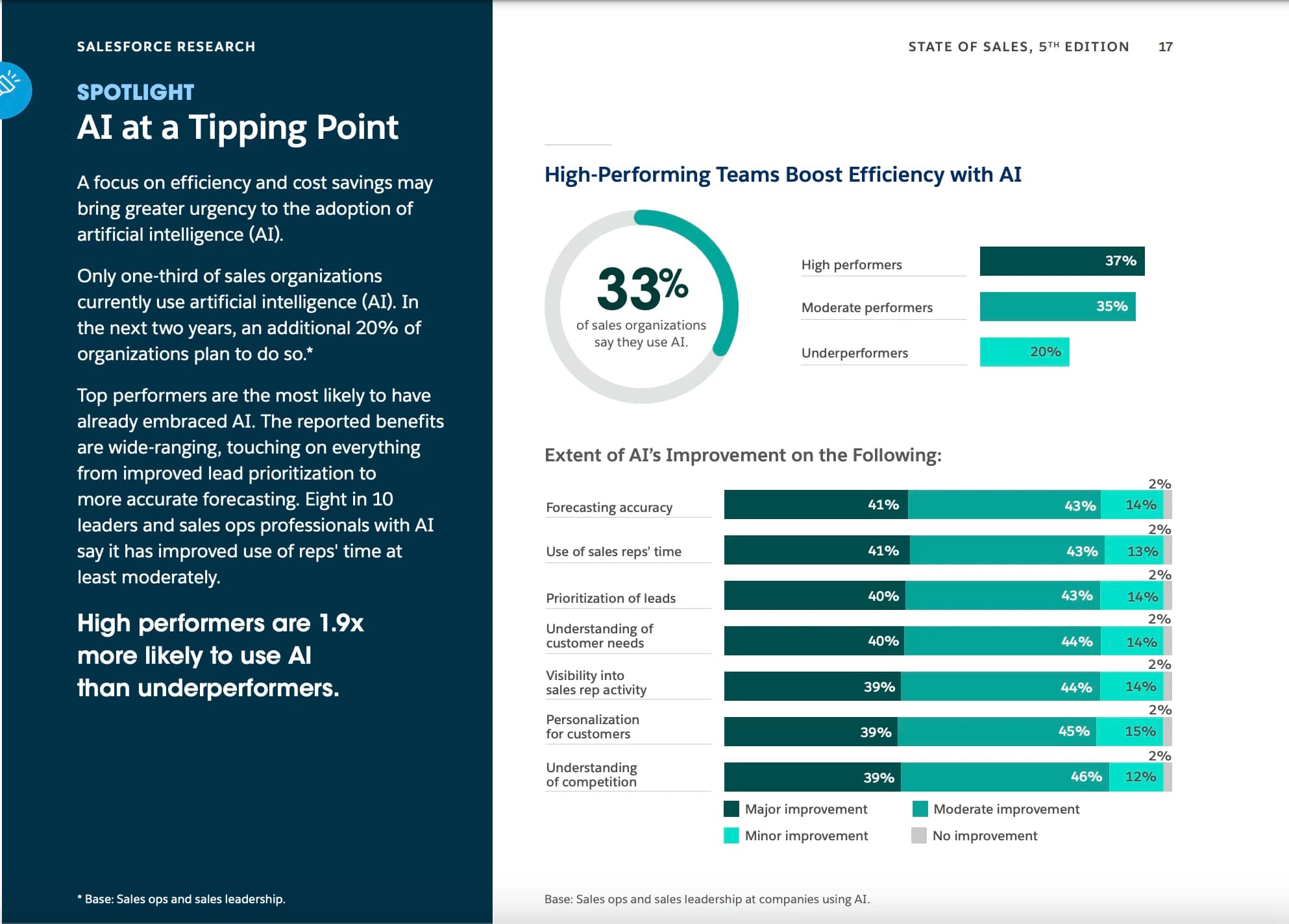
In today’s rapidly advancing tech landscape, AI is the game-changer. High-performing teams already harness the power of AI to magnify their efficiency, as revealed by the Salesforce State of Sales study.
And what’s the most enticing outcome?
Sales reps reclaim their time.
As we saw in our previous article, prioritizing leads & researching prospect are the two most time-consuming tasks for a sales reps.
Good news, this is also where AI & automation is the most helpful!
Nowadays, the entire lead generation process can be automated from lead identification to sales rep assignment.
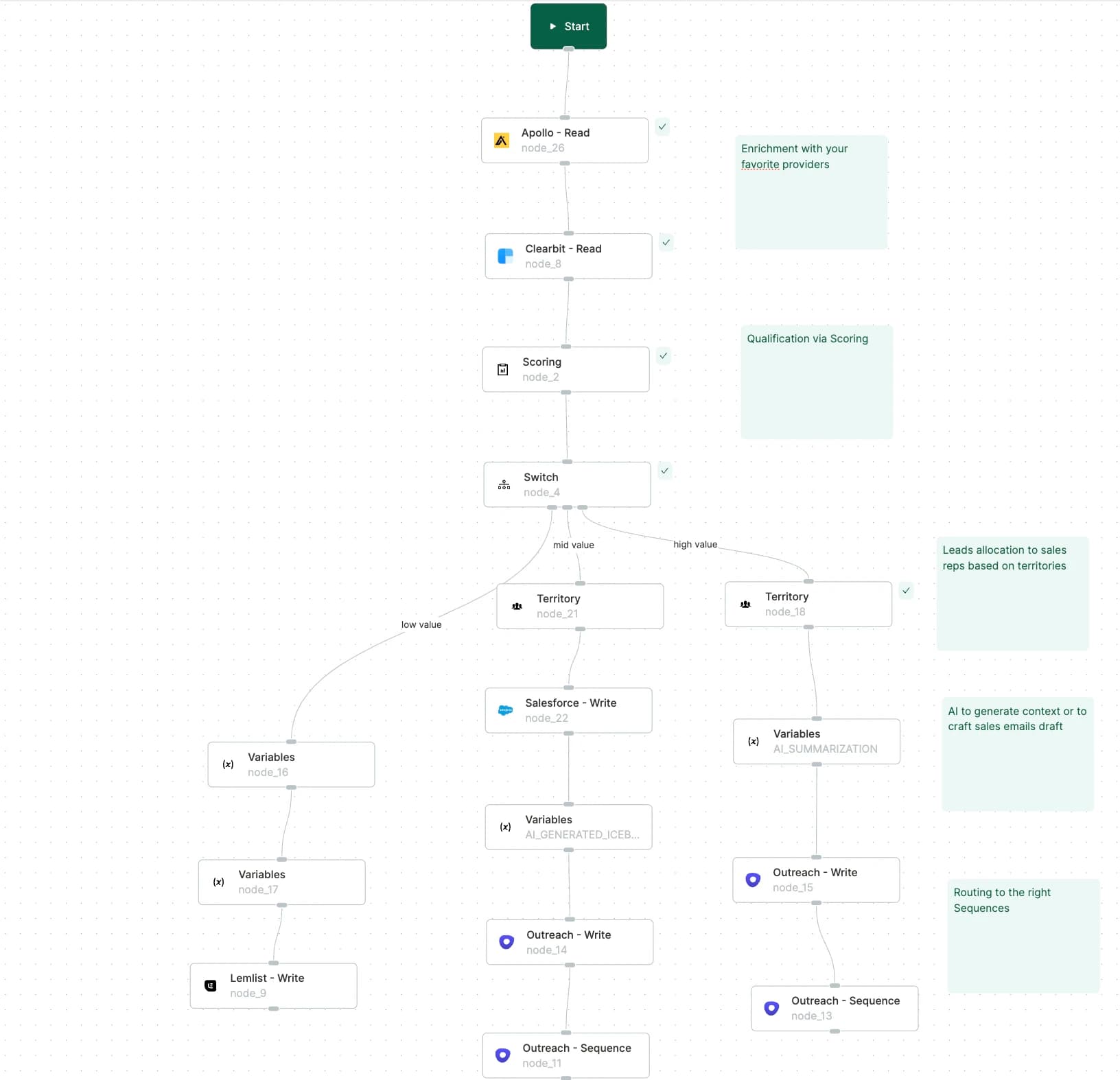
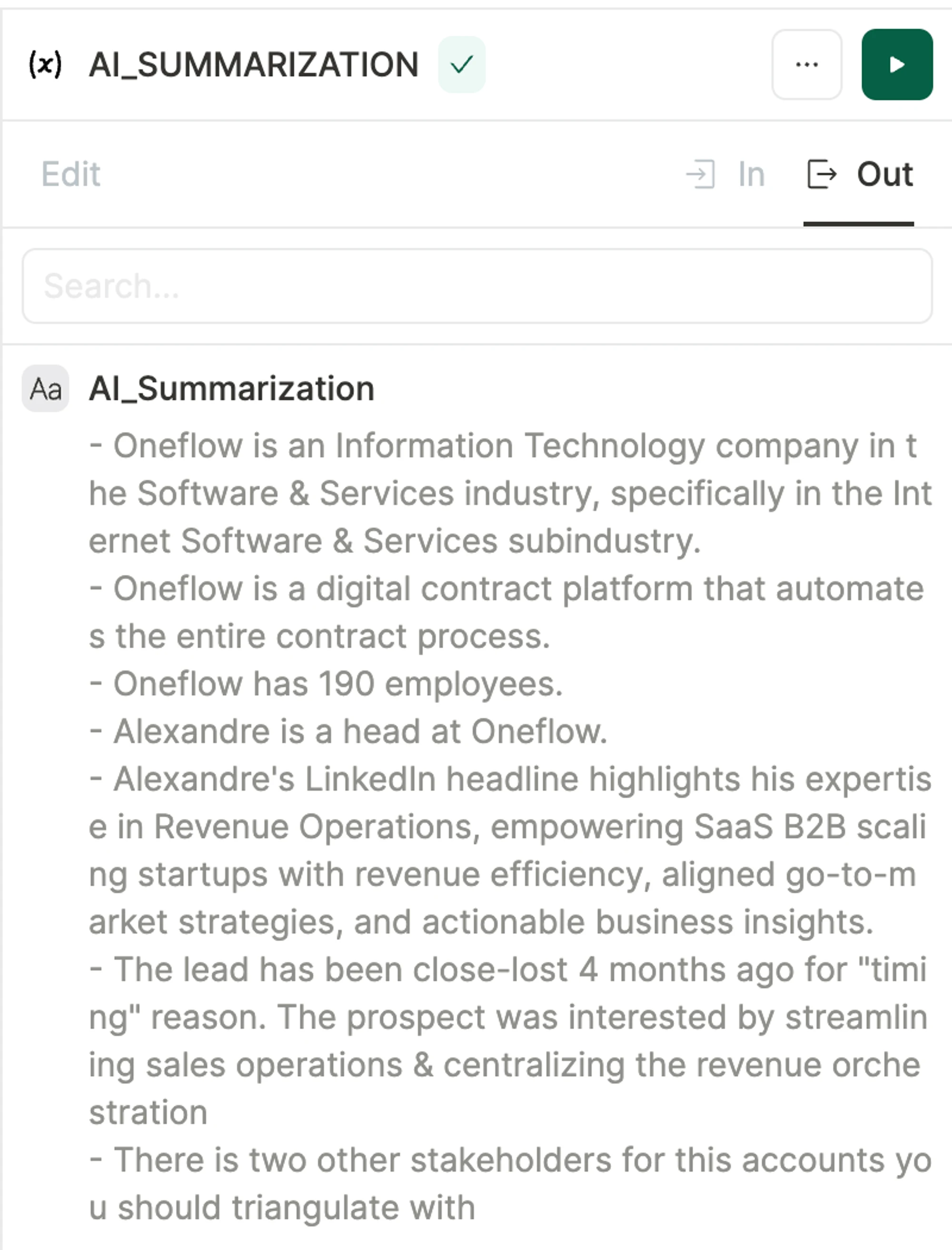
What stands out prominently in the AI realm is providing personalization & context at scale. Whether creating a personalized email draft, writing an icebreaker, or summarizing 1st & third-party data to provide context, AI is the true co-pilot of your sales reps.
To focus more on outcome, let’s revisit the “Sales Report 5th Edition”, it found that sales reps spend about 20% of their time researching prospects, preparing, and planning.
Now, let’s picture a typical sales team both before and after using AI and automation.
Before: Each salesperson spends 20 minutes on one prospect. If they look at 50 prospects a month, for a team of 10, that’s 167 hours spent on research monthly.
After: They can do this work three times faster, reducing the time to about 56 hours for the whole team each month.
So, with AI and automation, the team can save over 100 hours every month!
This is the primary goal of sales operations today: taking non-selling tasks off sales reps’ lists.
Now that we understand the numbers, you can see how you’d streamline the entire process, from finding leads to assigning sales reps and directing them to the appropriate sales sequence.
Time to say “Bye-bye guys, I’m retiring”?
Unfortunately, not yet!
The scope of growth outbound /sales ops is much broader.
Let’s dive into what the modern scope of sales ops looks like.
More automation means more enablement
With the rise in automation and AI use, it’s becoming even more vital to focus on internal education and advocacy about the outbound playbook you created.
Enabling sales reps to focus on selling means identifying the audience to target, creating supporting materials, analyzing what works and what doesn’t.
Your mission?
Equipping the sales reps with the necessary ingredients for a successful outbound strategy.

This means providing sales reps with
-
The Right Audience: Which segment to target and what do we consider as “a minimal viable Account”; the necessary characteristics to consider an account as “ready” to be assigned to a sales rep. This would entail enriching all company information (industry, company size, fundraising round, are they hiring, etc) with at least two stakeholders verified with contact data.
-
At the right time: Often determined by B2B signals or a scoring model that indicates momentum and helps in prioritizing leads.
-
With the right context: Provide pre-defined sales sequences that include touchpoints, channels, and messaging for each segment you want to address. With the help of AI, you can consolidate lead or account information as a custom attribute you’d push in the outreach tool, helping your sales reps drive meaningful conversations at scale.
Start Small, Validate, Expand

Optimization doesn’t end with a successful playbook idea. Then, you need to test & validate your assumptions.
Starting with a small team allows for quick iteration, identifying areas for improvement, and ultimately building a sales playbook to scale and industrialize that success for company-level use.
It’s often better to gradually expand your experiment: Start small, validate the approach, and then widen the net.
Reporting is crucial for monitoring performance, gaining insights, and proving ROI.
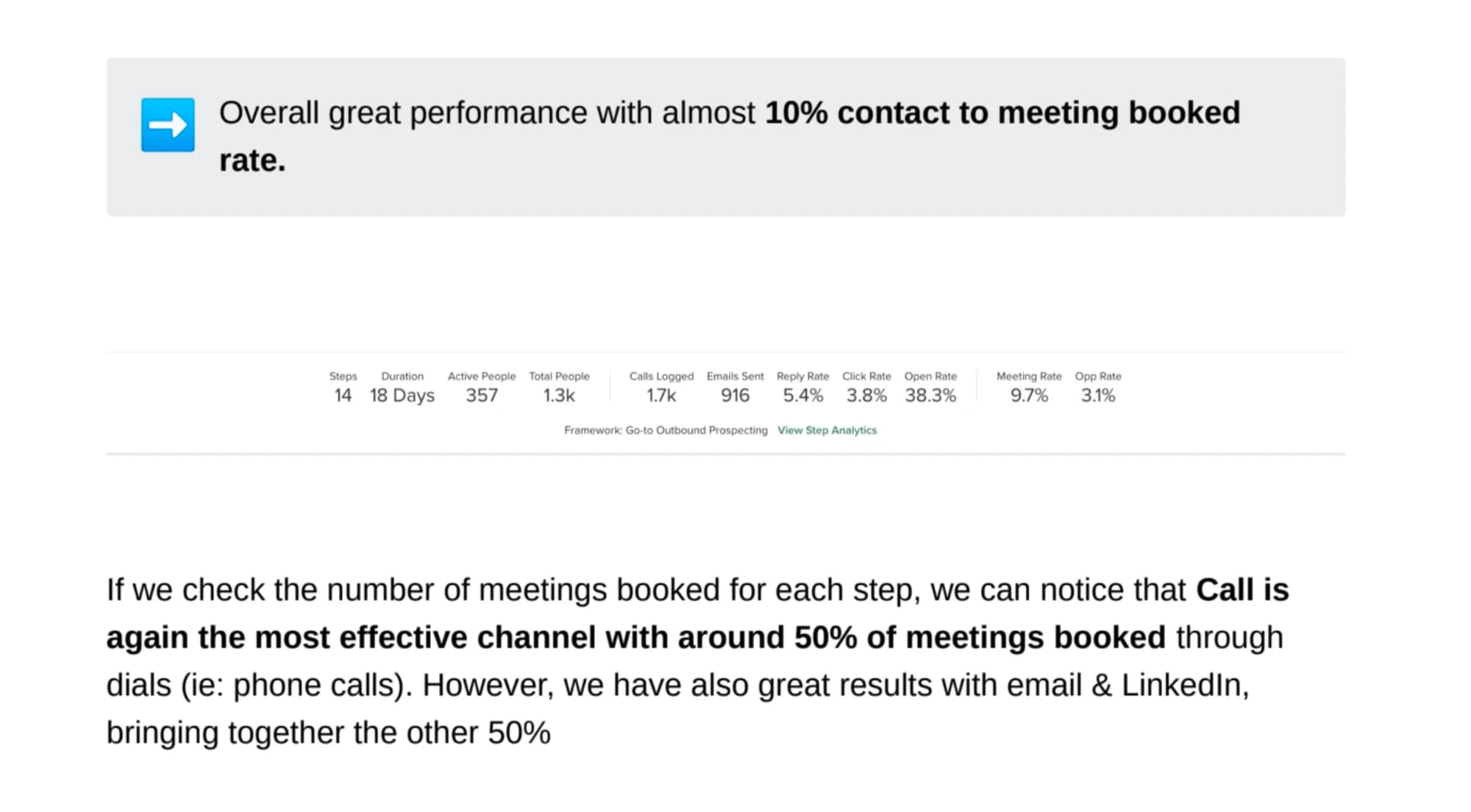

At the end of each iteration, you’d summarize what you learned, including the next improvement to focus on.
After all, which sales rep would decline a validated method to achieve their revenue targets?
Going broader means documenting your playbook and securing buy-in from all organizational levels, especially from executives and key stakeholders, to maximize your impact.
Playbooks & Training: The Pillars of Knowledge
In any company, your first buyers/customers are the person you work with.
Engaging and involving individuals at all organizational levels ensures your initiatives’ success.
Without the commitment from execs and internal stakeholders, you are a great individual contributor at best.
At worst, you have no impact.
That’s why an important part of your job is evangelizing what you do under the hood.
You should always document your playbooks.

Whether you do vertical- or intent-based outreach, you must craft a one-page summary of everything your sales reps need to know to master the audience.
-
Why does this particular audience deserve attention?
-
What are their pains?
-
Which social proof (existing customer) will resonate with them?
-
What does the sequence type (touchpoints, length, copy) look like?
-
and so on
For instance, creating materials for each intent to help sales reps understand each accounts with custom CRM objects to capture specific information and track the attribution of each leads (and by doing so being able to report on the conversion rate of a segment)


I like to use the lean canvas template, revamped as a sales playbook, gathering the key pieces of information on a specific audience in a digest way.

These materials are a good way to make every sales ramp up on each playbook you created.
Similarly to experiments, the process must be scalable to the company level and be available for new sales being hired.
To create a structured training program, it is recommended to establish an internal sales academy where winning playbooks can be transformed into systematic training.
This sales academy can be utilized during onboarding for new salespeople, enabling them to grasp the product and follow the best practices that lead to guaranteed performance.
I have been using 360learning, which lets you deliver certificates as proof of completion and track achievements while ensuring that new hires follow the process.
The ultimate goal of such materials is to reduce the time to perform for your sales reps. On this part, I recommend the framework by Vouris for the sales reps ramp-up.
Last thing you can do?
Keep iterating, track results, deep dive into sales recording, partner with marketing to support more global ABM initiatives and keep pushing 😎
 MaxDec 10, 2025