The ultimate guide to ABX

You’re probably familiar with ABM or account-based marketing, but you heard about “ABX” and wondered what the hell is this “new” thing?
You’re not alone.
Another acronym because yes we’re Internet folks, and we love category creation, using new terminology to look more innovative.
What it is about?
Well, it is more a new buzzword than a brand-new concept.
The foundations of ABX remain the same as ABM.
Don’t worry
We are still talking about a sustained, coordinated, strategic approach to identifying, engaging, closing, and growing the accounts we know we should win.
But we went from “Marketing” to “Experience”.
The term “experience” compared to “marketing” is, from a semantic point of view, more appropriate as ABM is a collective sport involving sales, marketing, and customer success to drive customer-centric journeys.
So with “experience”, it is no longer labeled as a “marketing-only” topic, and this is for the best as it has never been supposed to be the case.
You might be wondering “What is the point of changing one letter then?”
Still today, most companies continue to have disparate data leading to disconnected customer journeys.
"Customer-facing teams operating in silos will lead to jarring experiences, with impersonal or conflicting communications and time-consuming barriers to getting things done."
And it doesn’t stop there, nowadays, the average customer journey in B2B has never been more complex, especially with the COVID that accelerated the digitalization of the world.
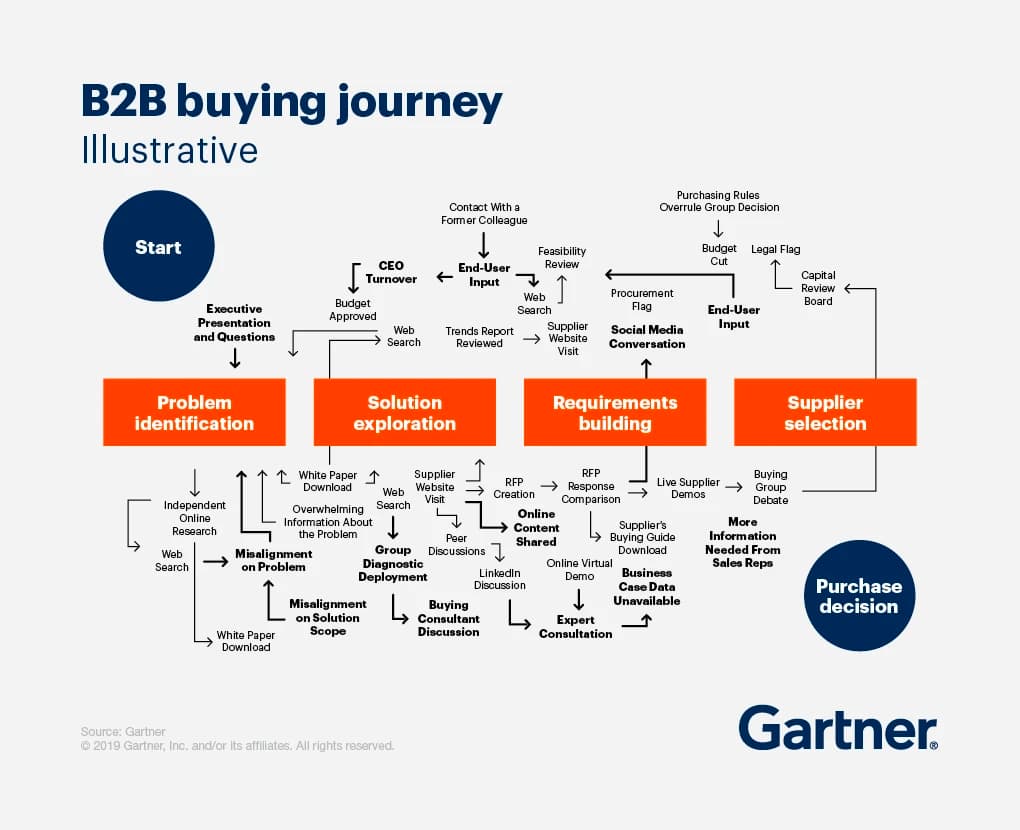 Gartner B2B buying journey complexity diagram
The TOPO sales Development Benchmark report revealed that 12 touches with individuals, not organizations, were needed in a concentrated period for any campaign to be effective.
Imagine this was published in 2014, not in the context of multi-threaded outreach as we must do in B2B.
Companies will face increasing pressure to adopt outcome-based tracking by achieving closer alignment with Marketing and Sales. More than ever, companies need to acquire a big-picture look at the customer journey by tracking key metrics related to appointments set, pipeline generated, and sales generated.
This brings us back to the promise of ABX.
With ABX, revenue teams collaborate to deliver a cohesive and tailored experience across multiple touchpoints and stakeholders.
The goal is to engage and build relationships with key decision-makers and influencers within target accounts to drive revenue and customer lifetime value.
What needs to be highlighted here is that the post-closing stage is also considered, ensuring that what has been sold by marketing and sales teams is being delivered by the customer success.
"B2B businesses that align their revenue engine grow 12X to 15X times faster than their peers and are 34% more profitable."
In this article, we’ll dive more into the ABX concept, why it’s important, and what to think about when implementing it in your organization.
Ready?
Let’s go!
ABX is the logical evolution of ABM #
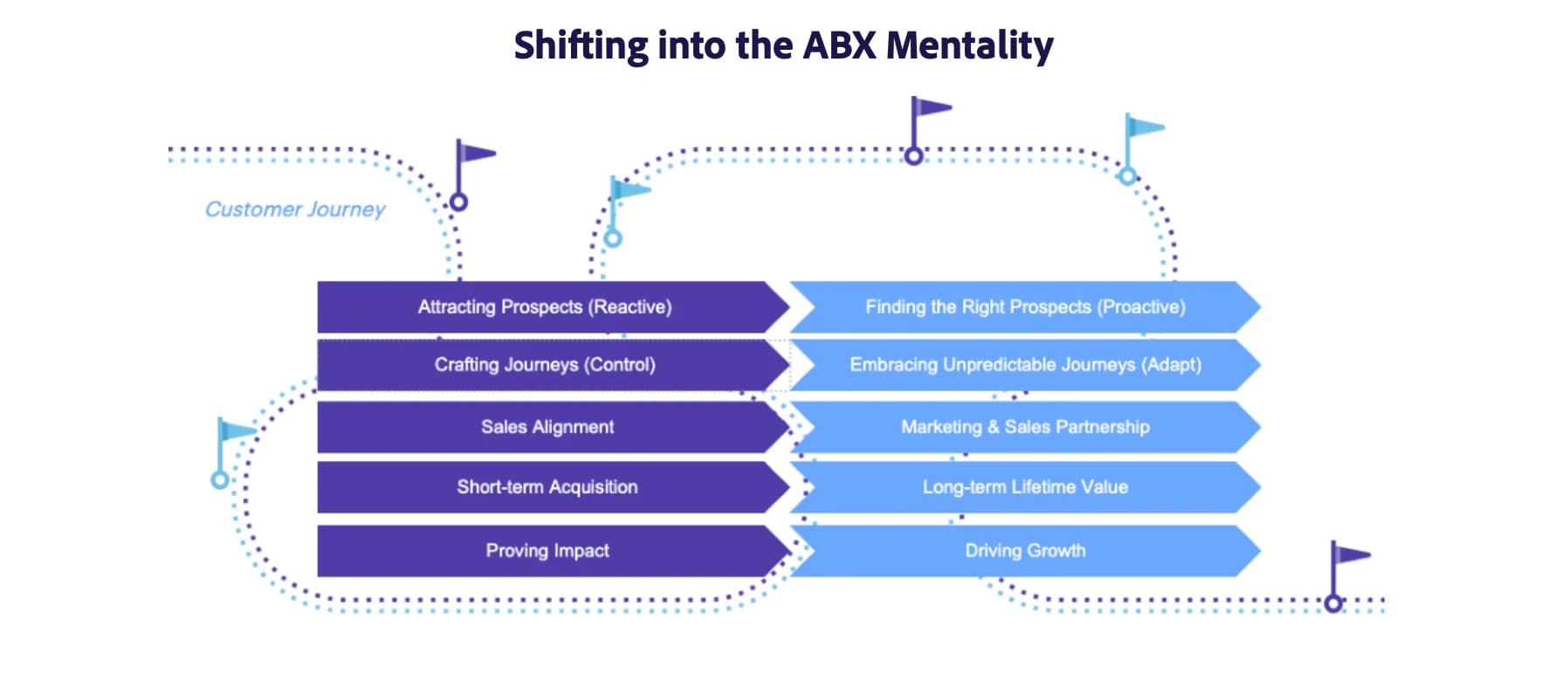 Evolution from ABM to ABX framework
"Don't count the people that you reach. Reach the people who count."
The quote from the father of advertising perfectly fits ABX’s mindset, except that we focused on accounts, not on people level.
In B2B, you have to think at the ACCOUNT level, as the typical buyer journey involves 4 to 10 decision-makers. You will be trying to reach all the players on the buying committee, not a single person. Your ICP definition, messaging, and overall GTM strategy should have that in mind.
The unintended consequence of former account-based Marketing methods, software, and sales funnel combinations is a vast overreliance on Marketing to bring qualified Inbound Leads.
Pause here. Think about C-levels
They may have downloaded a white paper but probably delegate the insights gleaned to an associate. They probably send in their underlings to research your innovations and watch demos, They simply don’t have time.
So, by and large, inbound marketing attracts influencers but doesn’t pull in people who can actually buy.
On the other hand, the sales led only has weaknesses as well.
90% of B2B decision makers never respond to cold outreach (HBR).
It takes 18 call attempts to get a business executive on the phone in 2017*(not better now). As a reminder, the average cold calling success rate is 2% (ie: 2 calls that convert into warm leads)
What’s the secret weapon, then?
Building the bridge between inbound & outbound approaches - Often called “Allbound” strategies.
Similar to the concept of “Combo prospecting” in sales, the value of ABX remains in the combination of channels, maximizing the coverage rate and overall performances of your LeadGen strategy.
It synthesizes the “engageability” of inbound marketing with the precision and targeting of account-based outreach, rooted in an intense focus on the customer at every stage of the buying journey, using intelligent insights to know when and how to engage with each account.
Let’s have a quick review of the ABX approaches benefits.
The Benefits of ABX #
One of the fundamental principles of ABX is recognizing that our buyers live in a world of information abundance and attention scarcity, making any interruption marketing ineffective.
Instead, companies need to build trust with potential buyers, identify the “magic moments” when customers are open to engaging, and then orchestrate the perfect interactions across sales, marketing, and customer success teams.
From a B2B perspective, organizations following an account-based strategy (ABM or ABX) have seen a customer lifetime value improvement of 80%. They have also seen win rates increase by 76%.
In a nutshell, those are the main benefits.
-
Increased revenue: ABX leads to higher average deal sizes, larger contract values, and increased customer lifetime value.
-
Higher close rates: By targeting high-value accounts with personalized content and engagement, sales teams can improve their win rates and reduce the sales cycle length.
-
Improved customer engagement: ABX puts the customer at the center of the experience, creating a journey tailored to their needs and preferences. This can lead to greater customer satisfaction and higher retention rates.
-
Better alignment between teams: By working together on account-based initiatives, marketing, sales, and customer success teams can improve communication and collaboration, leading to better results. It will let you learn faster when testing new segments.
Now, let’s dig deeper into the different types of ABX approaches.
Type of ABX strategies #
It’s a common misconception that ABM always involves completely bespoke 1:1 approaches, with heavy investment in a few high-value prospects.
In reality, there are different types of AB(X).
The potential ACV determines the number of channels, budget, touches, and personalization utilized within an ABX program.
You can have a blended approach as you’ll likely employ more than one.
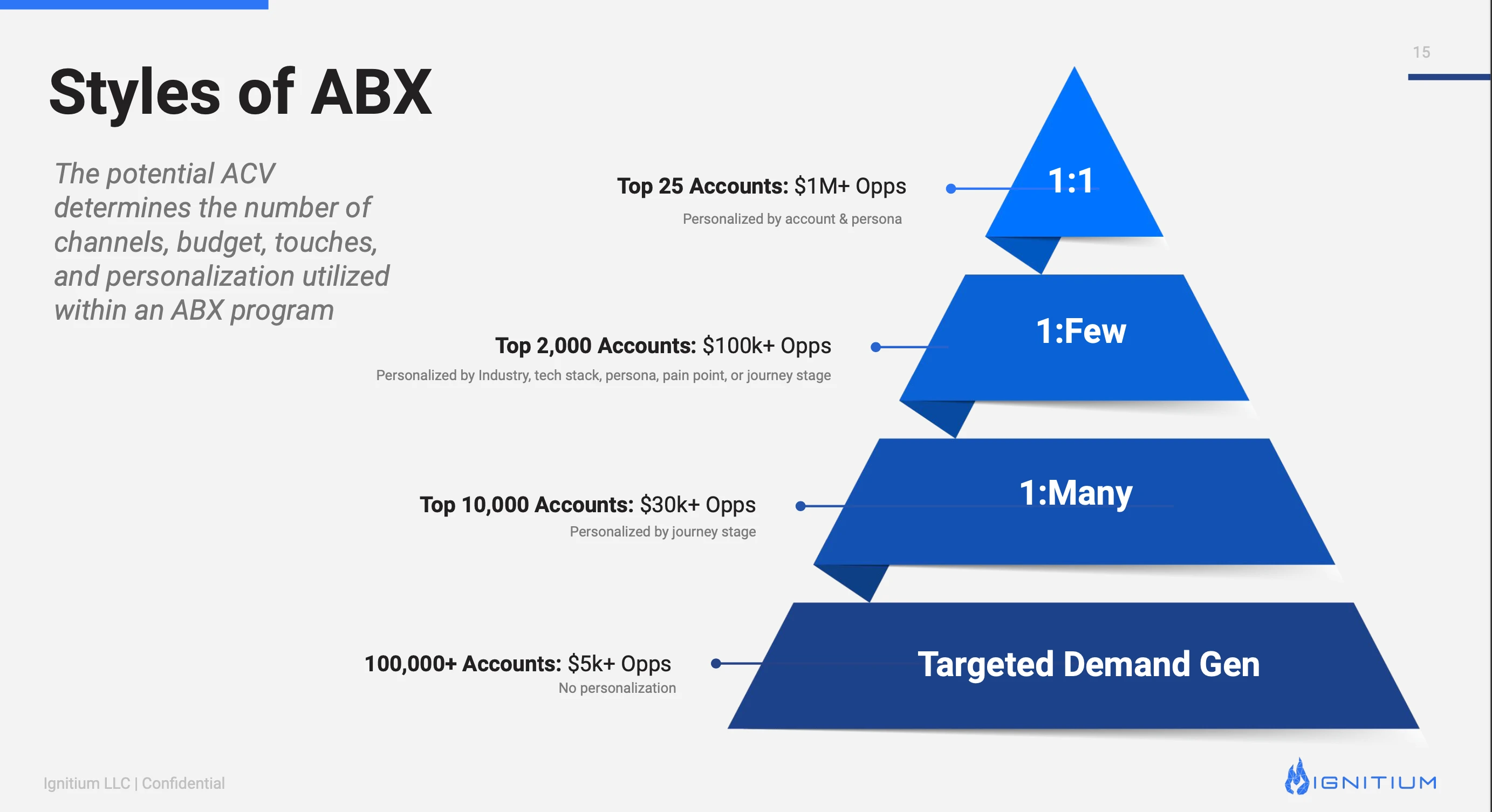 Different ABX engagement styles and strategies
1:1 for strategic accounts #
1:1: Highly customized programs reserved for strategic accounts with high deal value and executed on a one-to-one basis. With 1:1 ABX, account teams build stronger relationships with the company’s most valued customers and prospects via highly targeted marketing interactions that demonstrate an in-depth understanding of their business issues.
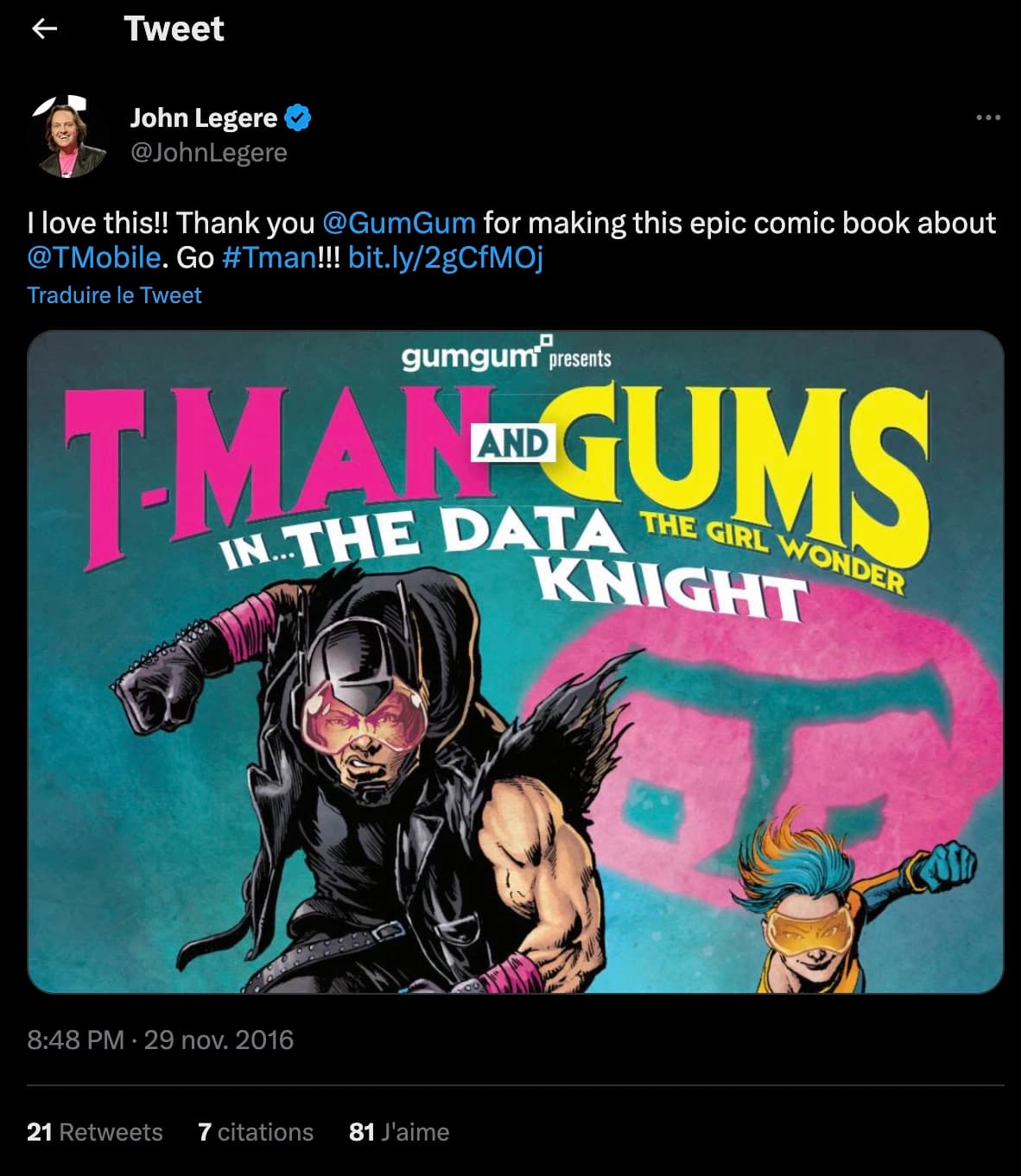 GumGum ABX campaign example
A successful example is GumGum, analyzing the social media of T-mobile CEO John Legere, already customer, and finding out that he is a big fan of Batman. The GumGum developed a comic character called T-man, saving the city from lousy phone services with his sidekick, Gums.
By utilizing image-recognition marketing technology in the comics, GumGum helped T-mobile to spread its message while making sure he won’t churn by delighting them with this hyper-personalized experience.
Another example this time with gong prospecting Cisco.
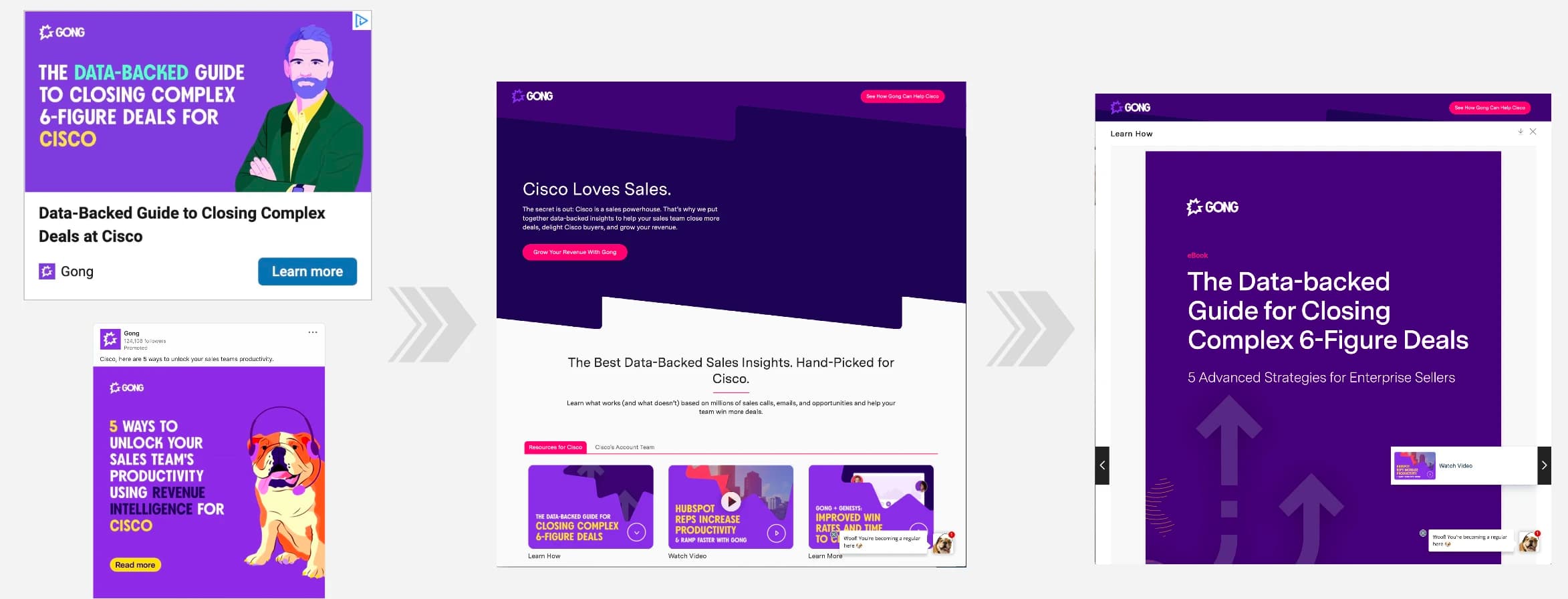 Gong ABX implementation strategy
1:Few #
One to few ABX is about creating and executing lightly-customized programs for clusters of accounts (industry, persona, company size, or pain points) with similar issues and needs. It still involves some targeted campaigns and personalization, but the focus is shifted from individual accounts to larger volume of accounts.
The revenue teams generate customized content for the targeted group and dedicated sales sequences per persona. This often includes a mix of ads, web personalization (custom landing pages), and, eventually, some direct mail or custom events.
One great example of a successful 1:Few ABM campaign is the one executed by Fullfunnel for their client, Iridium.
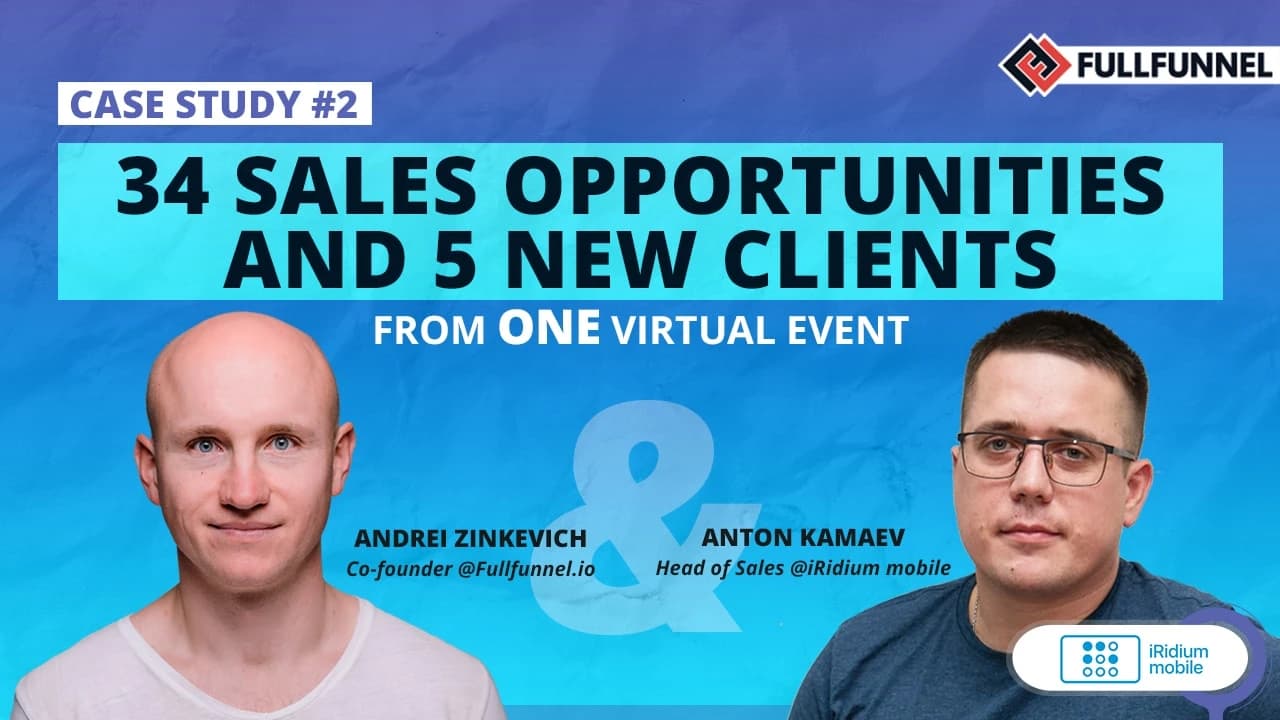 Full funnel ABX strategy visualization
They ran a virtual summit that generated:
-
2320 sign-ups
-
34 sales-qualified opportunities
-
5 new customers
-
Cost: $3000
1:Many #
Programmatic ABM, or 1:Many ABM as it is sometimes called, represents the lightest touch of Account-Based Marketing. The strategy involves the mass targeting of numerous accounts, with a strong reliance on technological solutions and automation to streamline the process.
The personalization aspect relies on variables, intents personalization, or personalized assets (like banner-bear) to leverage customization at scale.
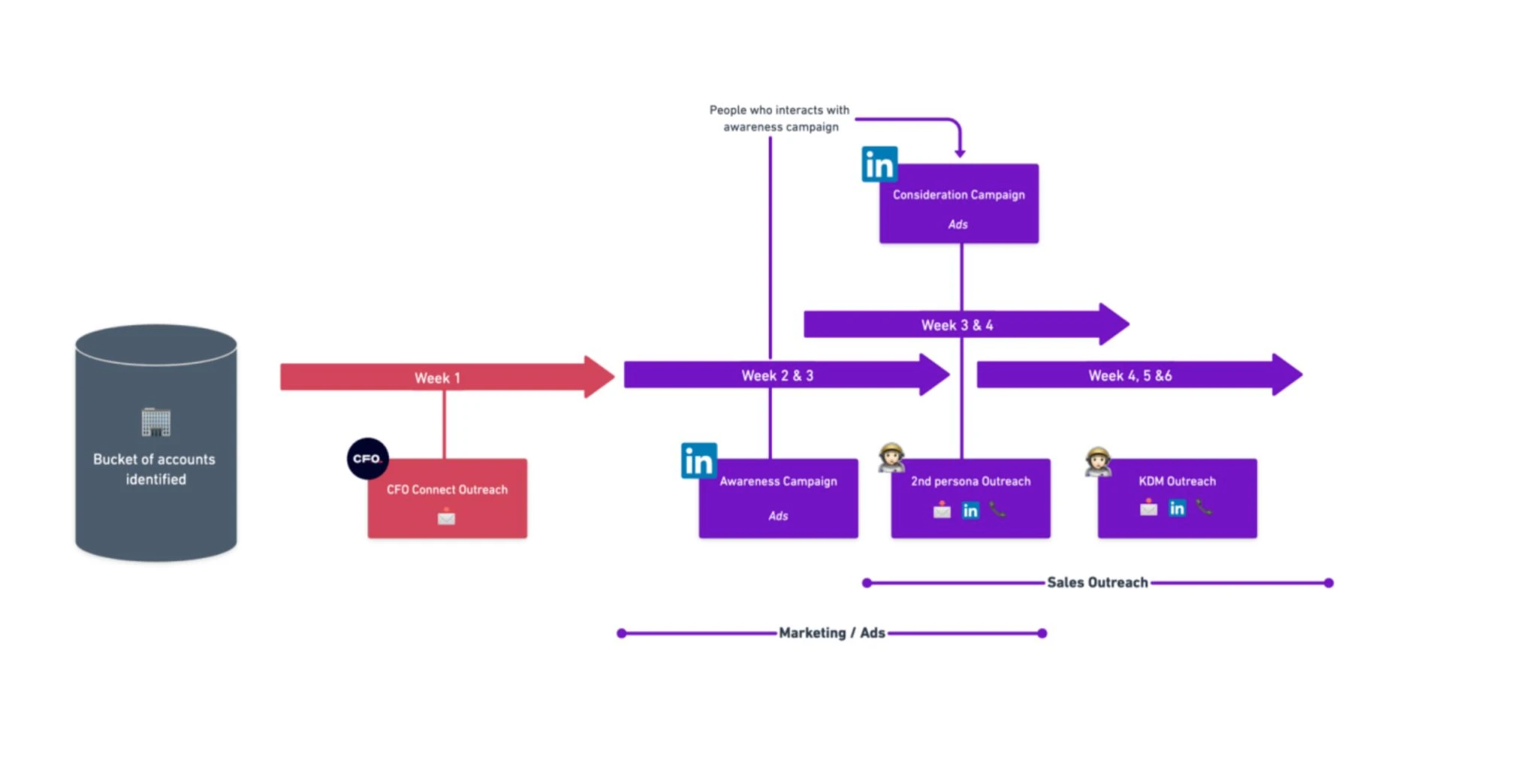 One-to-many ABX approach diagram
It often features a targeted display ad campaign for multiple target accounts from different industries, with the ad messaging and content offerings customized based on the industry and the customer’s buying stage, as well as dedicated sales sequences based on the same criteria.
DemandGen #
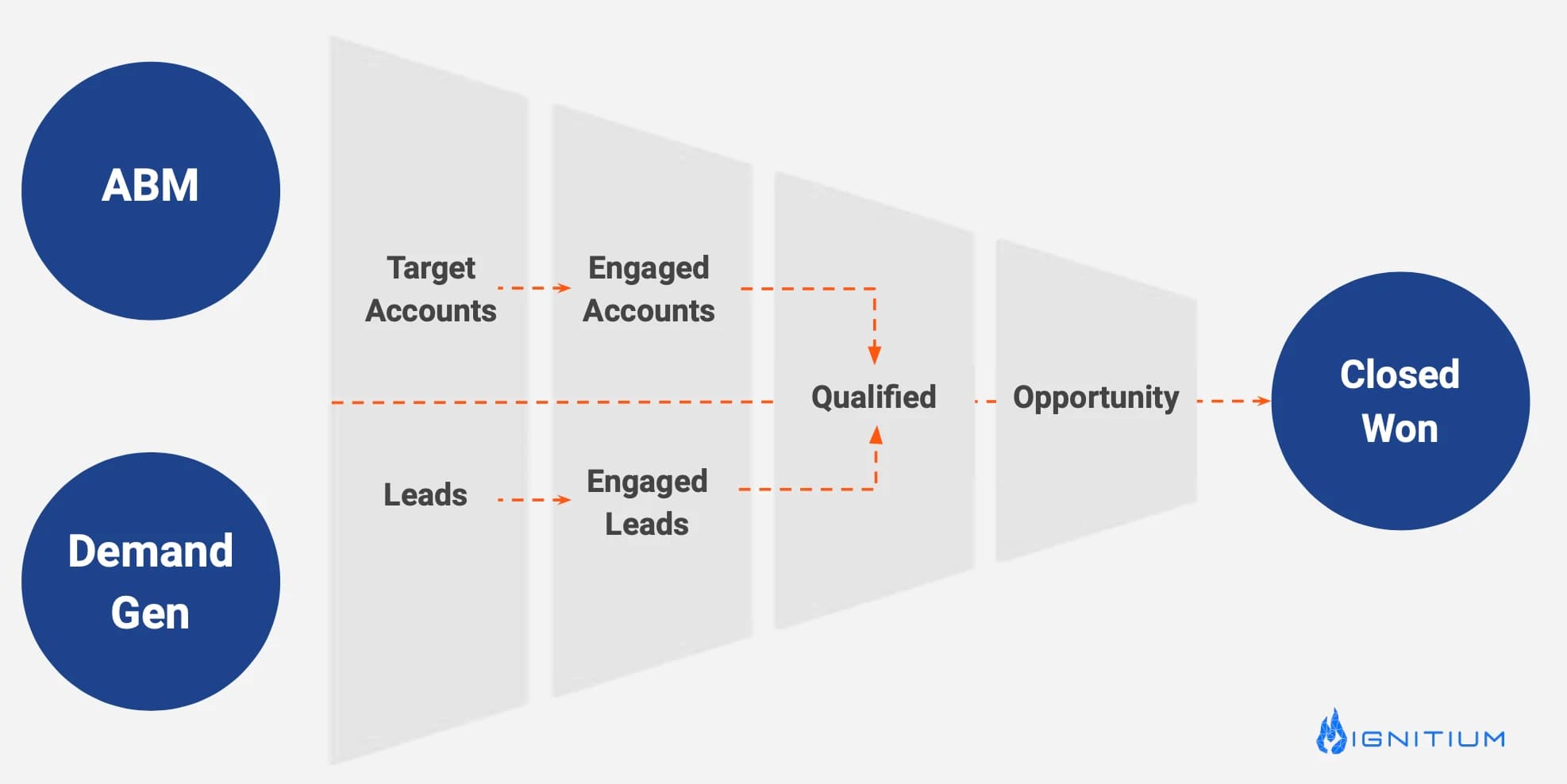 Demand generation vs ABM comparison chart
Demand generation is the process of increasing awareness and demand for your product or service. The goal is to expand your audience, build authority, and generate interest in your brand, creating demand and generating new leads. This is often a marketing responsibility.
Specifically, it involves inbound channels like ads (Linkedin, Facebook, Google), and content strategy (articles, webinars, podcasts, social posts, free products) to drive awareness and educate potential buyers.
For this type of strategy, you focus more on leads than accounts. The main requirement is to clearly understand your ICP and the pains you solve for them.
Finally, you can have a mix of all those ABX type, with conditions will route accounts and prospects to the appropriate strategy based on the deal potential value, the average engagement, the number of stakeholders involved etc..
How can you start your ABX effort by doing a Proof of Concept?
Let’s get to it!
Getting Started with ABX: Planning your pilot. #
Prerequisites #
Jumping ABX require to think about many things. Let’s do a review of mandatory steps.
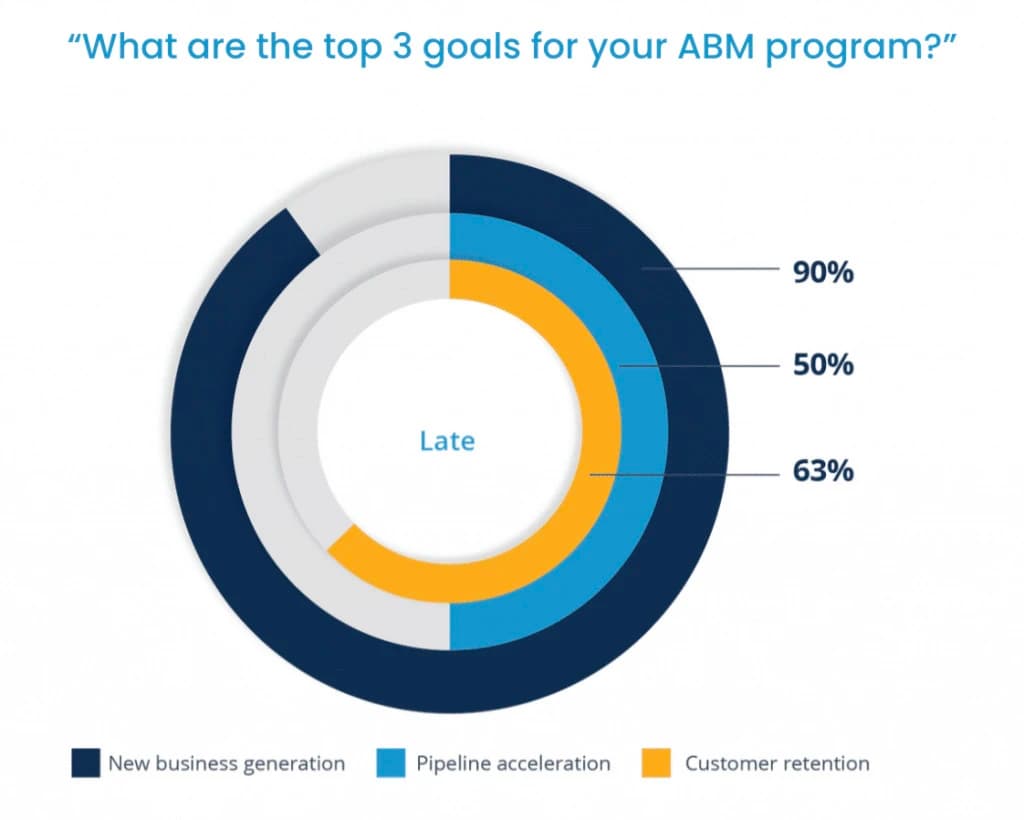 ABM goals and objectives framework
Involving multiple teams implies gaining clarity and alignment on your ABM objectives. It can be getting new shiny logos, but that’s far from the only possibility.
-
New logo acquisition
-
Increasing sales velocity or deal size of existing pipeline.
-
Improving the close rate of existing pipeline opportunities
-
Expanding business (upsell/cross-sell) with current customers
-
Improving retention of current customers
Clear KPIs and tracking #
It’s important to ensure that your ABX strategy can be embedded and mapped into your tech stack so those account touchpoints are captured and fully visible within a centralized source of truth.
You should be measuring results both at the account and contact levels. As you will have a multi-threaded, multi-channel, multi-touch series of engagements over time, each interaction should be visible and weighed at the company level.
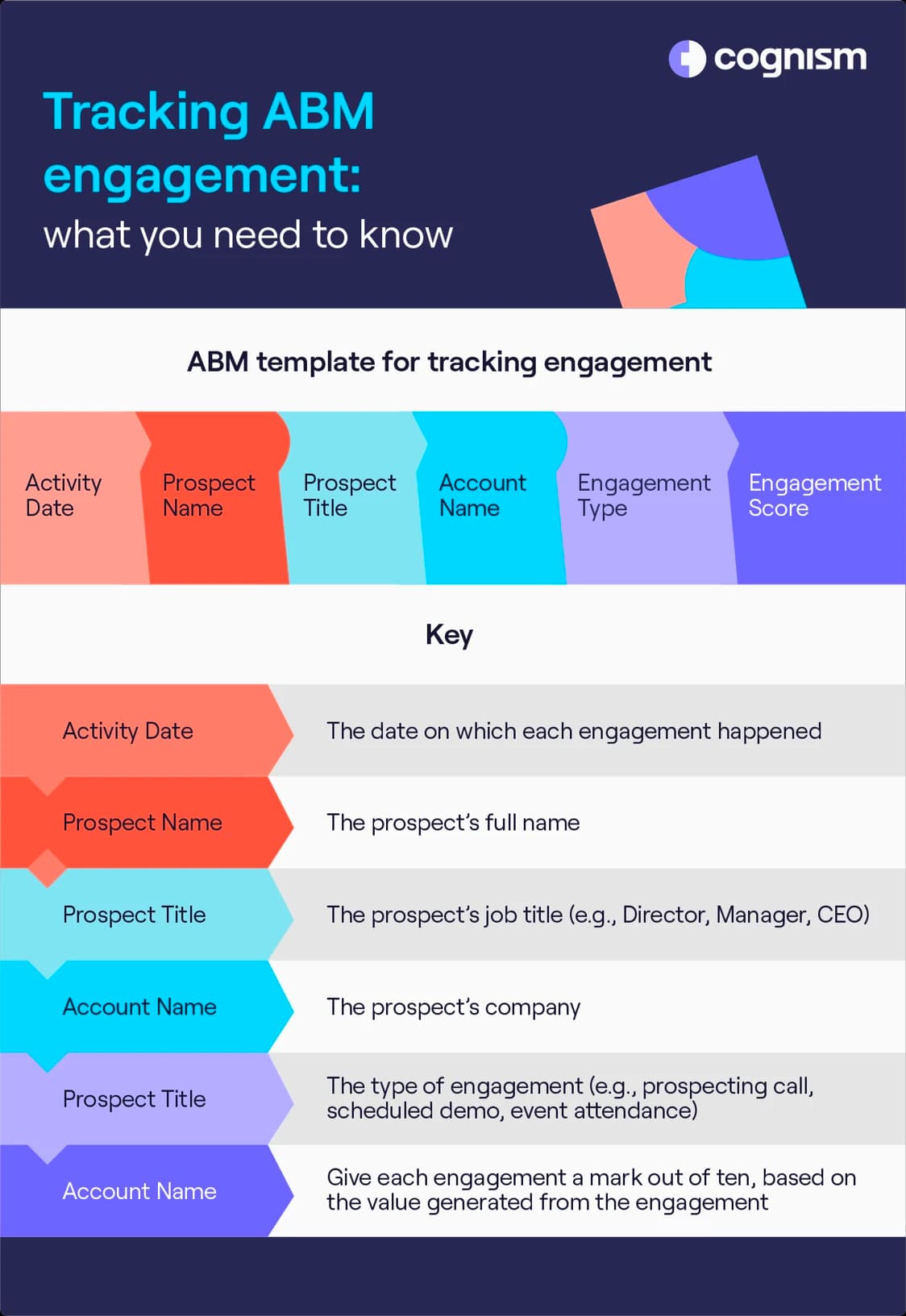 ABM tracking and measurement dashboard
Getting the Executive Alignment #
A vital aspect of building strong ABM foundations is to get sponsored by executive teams to ensure alignment, clear ownership, and good collaboration with other teams.
If you can’t directly and credibly tie your ABM strategies and metrics to revenue, you’re not going to gain their buy-in.
When your work is seen as essential to one or more executives achieving their goals, money, headcount, barrier smashing, and everything else you need will follow.
GTM team alignment #
The other essential area where you need an alignment is between sales and marketing. They need to be co-owners of the project.
In my experience, it comes down to asking this question: do marketing and sales know and understand each other, or are they separate silos?
If not, start by identifying the likely champions and co-owners in sales and marketing to get your ABX evangelist.
Having a common set of metrics, defined ownership, and setting an operating cadence is mandatory to ensure your GTM teams are committed to the success of the ABM pilot.
You can assist the collaboration by aligning people, process and technologies: having an account scoring that triggers the handover from marketing to sales, slack notifications to keep people excited on the progression of accounts status, etc.
Always PoC Before Scale #
You can’t take your foot off the gas on your current demand generation programs and go “all-in” on ABX. You need to run a pilot first.
Once you have clear objectives and the stakeholders around the table, it’s important to define what success looks like and how many accounts you’ll need to target to get there.
For your Poc, you don’t want to target a high volume of accounts. You need enough to make it significant but not too much to let you time to iterate. At this stage, you should adopt the Paul Graham mindset, “Do things that don’t scale,” and focus on learning. “Test & Learn” is and will remain the evergreen growth motto.
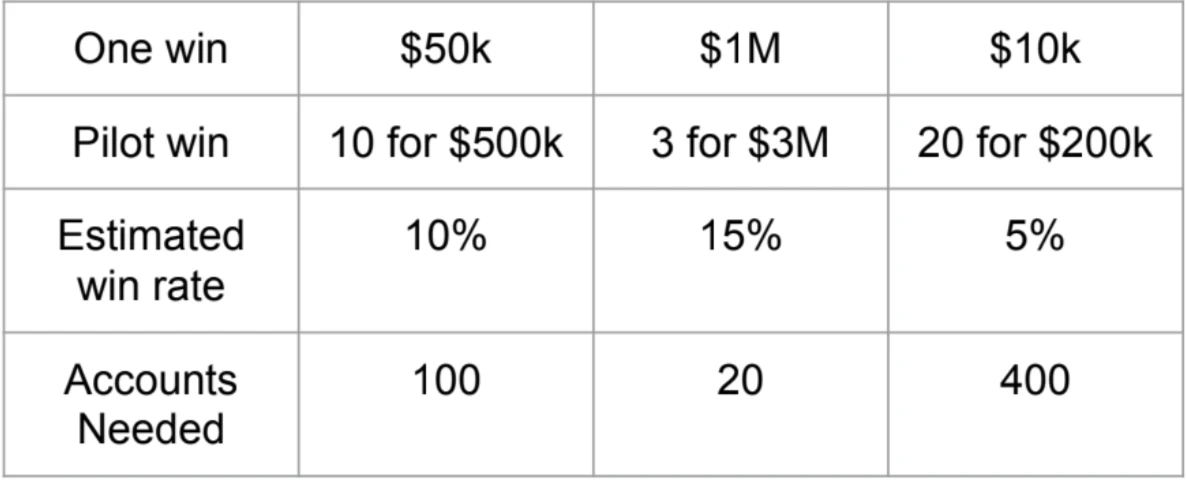 ABX pilot program implementation plan
You don’t need to involve everyone in the pilot. The best is to create a hybrid squad composed of different stakeholders from marketing and sales or customer success depending on your goal, get an executive sponsor and a budget, define SMART goals, and create a dedicated slack channel for this ABX squad.
Your objective is to figure out which channels, assets, messages, and CTAs REALLY move the dial, and which ones are ineffective (or maybe even counter-productive).
 Proof of concept to scale progression for ABX
Then you should be able to start your PoC. Only after reaching your success metrics will you be looking to expand your program.
Let’s dive into the core components of your ABX program.
Key components of ABX #
Step 1. Formalize your account selection process #
Everything in an account-based experience strategy depends on a deep and reliable understanding of the accounts and audiences you’re targeting.
ABX leverages first and third-party data to identify which accounts are the best fit to do business with your company
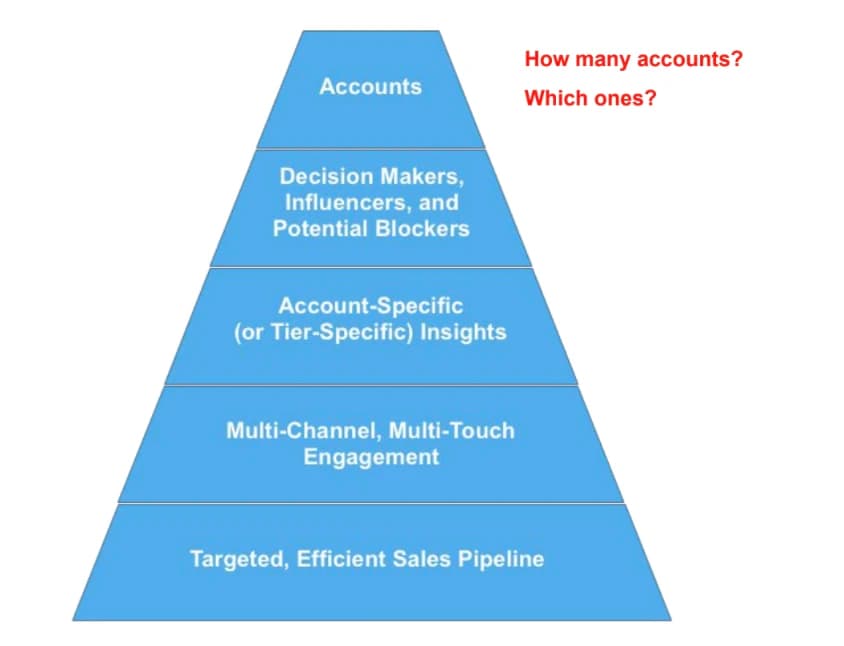 Key components of ABX strategy
For this step, getting your TAM centralized in one place, the promise of a PRM, giving you access to internal and third-party data, can be useful in identifying high-quality target accounts.
The best account targeting is a mix of
-
Fit: The right type of company, those who match your ICP
-
Intent: Intent data can supplement existing customer data with a rich set of proprietary, third-party user data. This enables you to target companies that are currently “in-market” for your solution, or at least most likely to convert (ie: Employee growth rate on LinkedIn sales navigator, G2 Buyer Intent showing you buyers researching your product category, new technology implemented among others)
-
Behavioral: Based on companies that engaged with you (Website visits, events, socials etc.)
After leveraging firmographic, technographic, and intent data to prioritize accounts, you need to start identifying the buying committee and everyone involved in the purchase decision, potential blockers included!
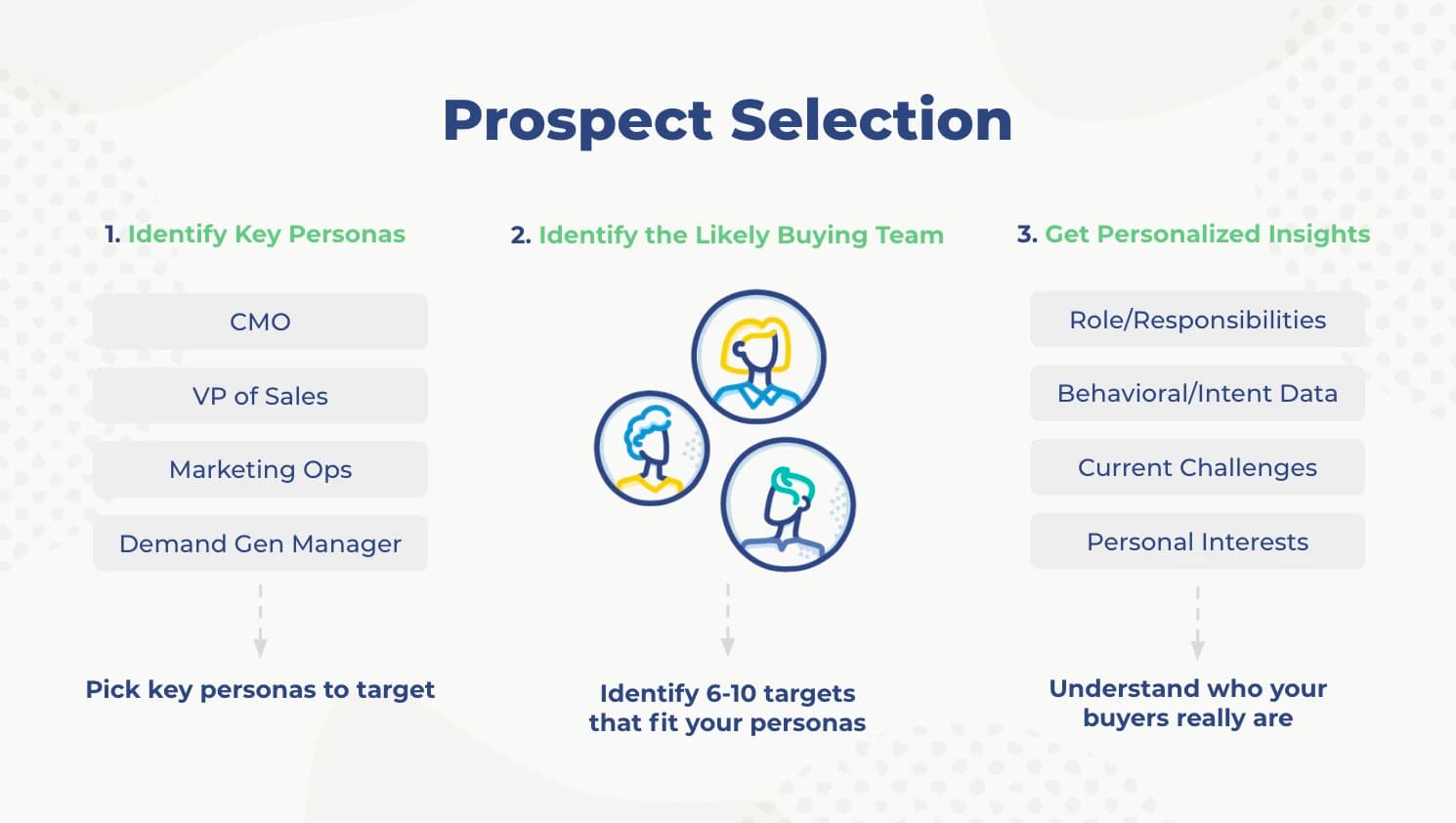 Prospect selection criteria and framework
Building out organizational charts or “account maps” and setting a policy of multi-threading will ensure you are not limiting your opportunity creation and deal velocity.
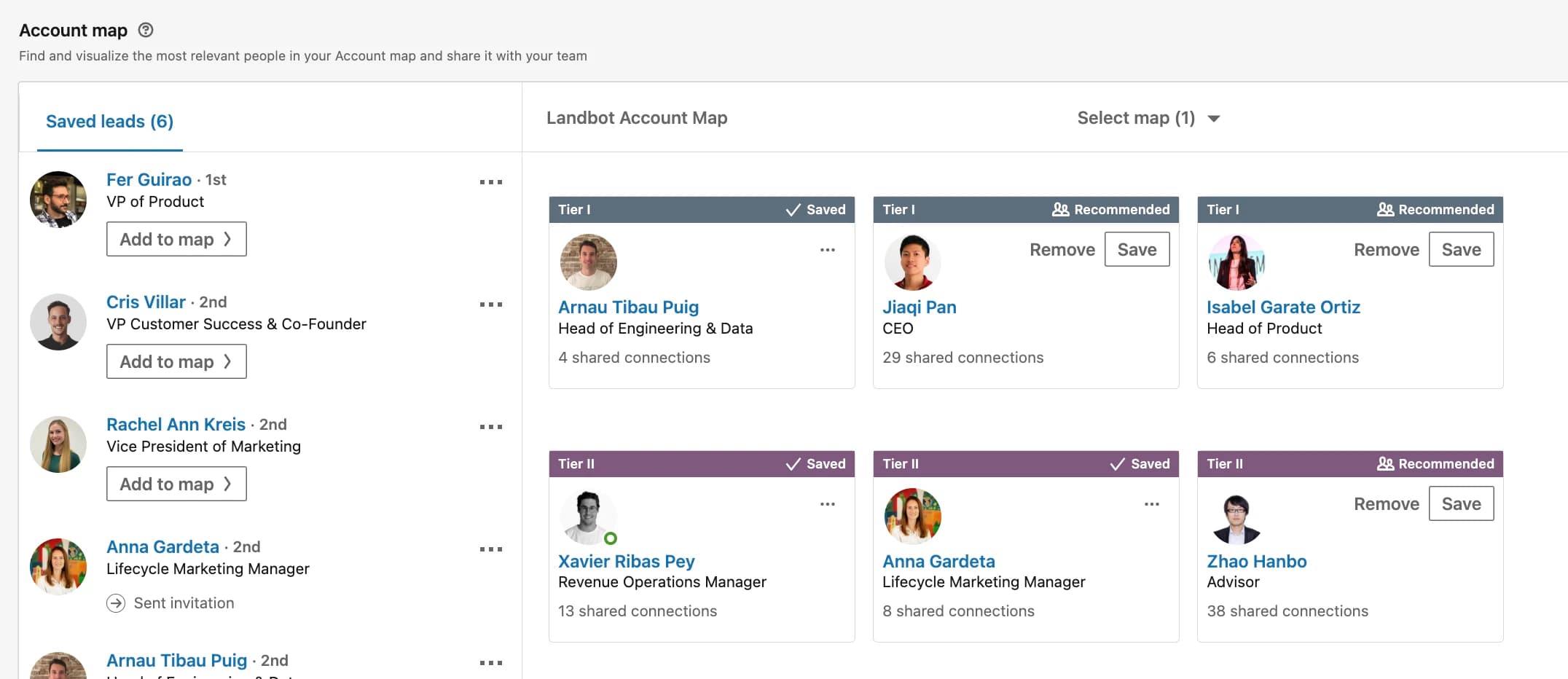 LinkedIn account mapping example
Indeed, to close a significant deal, you need the line of business, IT, Stakeholders, and procurement in the loop. You need to establish multiple bridges to span the moat into the castle.
These are called threads, and the #1 reason deals don’t close is because the seller is working single-threaded or is dependent on one stakeholder. Even the most senior of people won’t sign off unless they are convinced that there is a consensus for the business case and change management.
No one (except Elon Musk?) make unilateral decisions or try to push decisions down the organization, so you need to build multiple relationships
The more you have stakeholders in the loop, the more you increase the odds of converting an account. Plus, you can save them into Linkedin Sales Navigator as leads and accounts for news, updates, and insights to drive meaningful conversations.
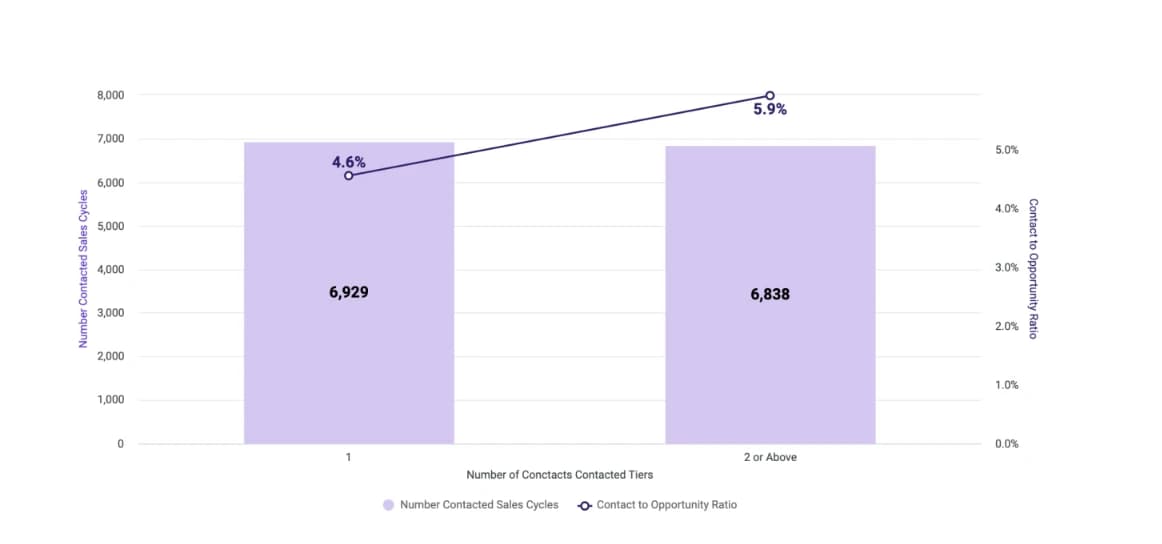 Multi-stakeholder triangulation strategy
Once you’ve identified at least 4,5 (up to 15) stakeholders per target account, you can think about how you map your solution to their priorities.
Step 2. Personalize your content & Messaging #
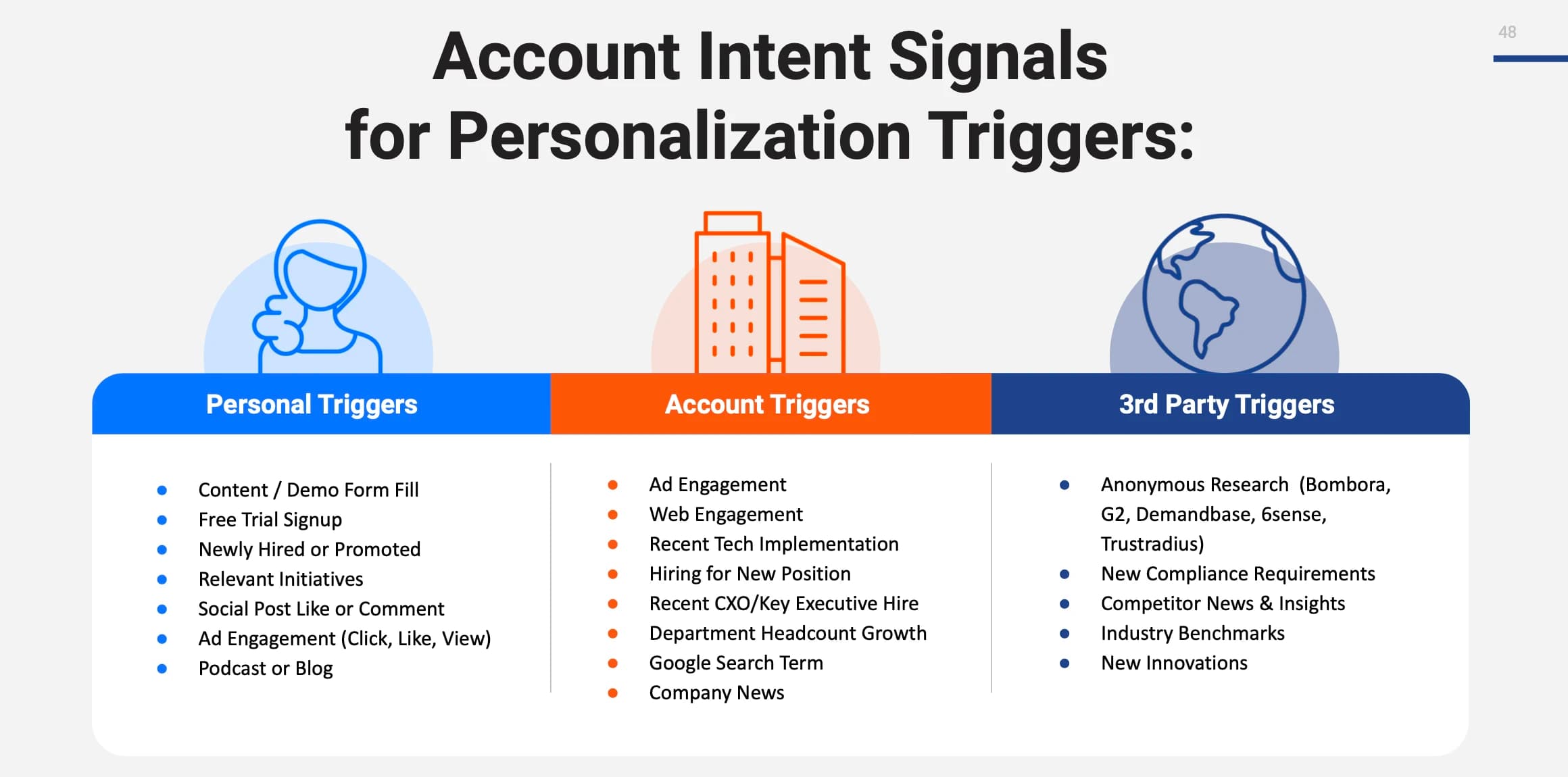 Account intent signals and buying indicators
Once you know who you’re talking to, you need to figure out what to say.
The efficacy of precise targeting in Account-Based Marketing (ABM) hinges on the ability to create and deliver content that aligns with your target accounts’ priorities and pain points.
Here it very much depends on the size of your clusters. The type of ABM will tell you how deep you should research.
The fewer people you’re targeting, the more important it is to understand them intimately.
For Strategic ABM, personas don’t matter. What matters is the individual and their unique needs. On the other hand, for programmatic ABM, creating content (ie: landing page) at a persona level would be enough. You will also run persona/industry based sequence, creating sales assets that scale using a tool like bannerbear etc.. You can also make your website dynamic using a tool like Mutiny, or doing it manually with an IP reveal tool (Clearbit, Albacross) coupled with GA4/ Google optimize for instance.
Tools like Uberflip can adjust content and tailor it for specific accounts, industries, or personas (when the visitor’s company is identified)
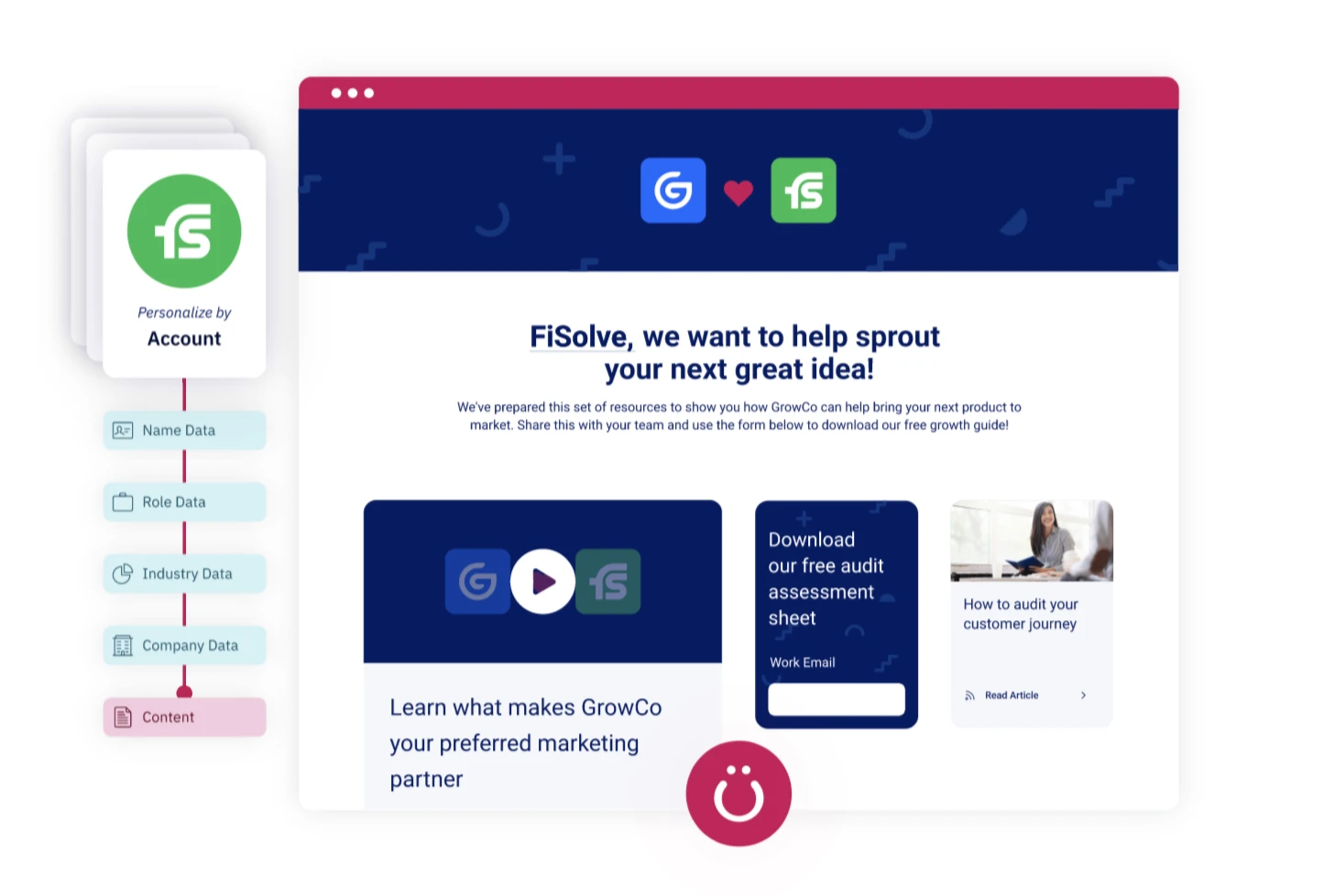 Uberflip content personalization example
Step 3. Leverage multi-channel engagement #
Once you understand your accounts and the journeys you need to take them on, you need to think about delivery: choosing the right channels to engage them.
Each channel plays a role in the overall engagement strategy: Inbound channels are suitable for educating and warming up leads, while outbound channels are more effective in persuading and getting in touch with prospects.
However, it is important to optimize for the ultimate goal of the campaign rather than focusing on individual channels. The goal again is to deliver a consistent, coordinated experience.
Don’t optimize the sub-system. Optimize for the ultimate objective.
Personalization is an essential aspect of the customer experience, and should be applied consistently across all stages, including social, display, events, sales sequences, and assets.
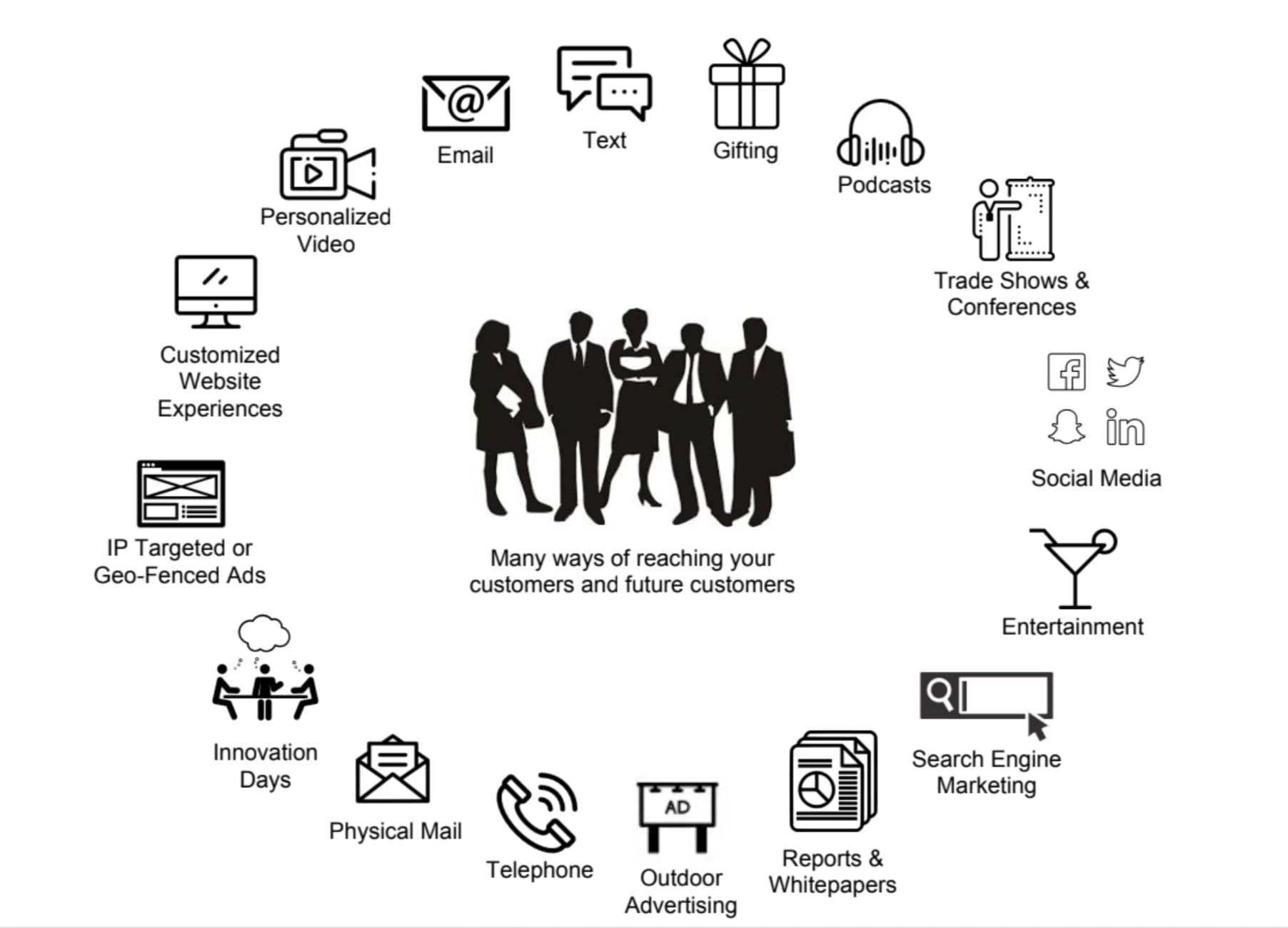 Multi-channel ABX orchestration strategy
A typical ABX strategy would be divided into 3 main stages featuring different channels:
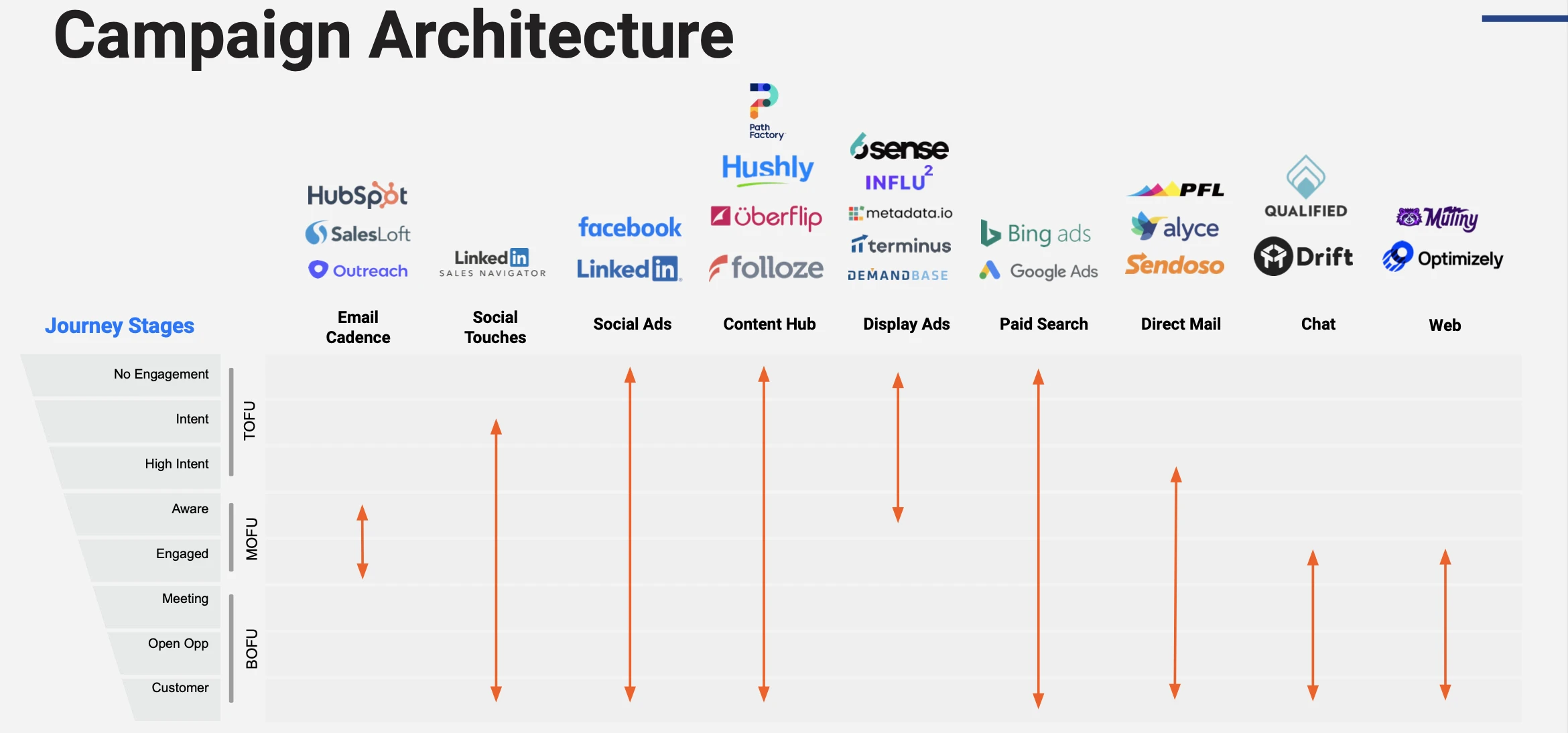 ABX campaign architecture diagram
Top of the Funnel: The goal is to drive awareness and start influence the accounts.
-
Display ads / Native ads: Targeting Function + Seniority
-
Social Ads: Targeting job title
-
Paid search: Pain related search terms
-
SEO & content: Downloadable lead magnets (ungated eBooks or free guides) to help them start their buyer’s journey
Middle-of-funnel: The goal is to educate on their pains, position your solution as the best provider to suit the prospect’s needs
-
Webinars & online events
-
Organic Social: Follow & connection invite to personas within targeted accounts
-
Content: Comparison, content around the most common customer questions, everything that will answers the FUDS of your customers.
-
Social ads: short video presentation of your solution or multiple for each features, case studies from customer similar to them, G2 reviews etc..
-
Paid search: Focused on the “consideration stage”
-
Email sequences: Pre-nurturing marketing emails or first sales sequences
Bottom-of-funnel: BOFU is the closing stage. The goal is push persuasive content or transactional materials.
-
Content: Persuasive content like shiny testimonials of similar customers, live demo ..
-
Website: Trials, personalized landing page (via Mutiny, or Optimizely)
-
Remarketing ads or custom audience on “engaged accounts”
-
Sales sequences: Multi channel sequences (Linkedin, email, voice mail & cold call) on multiple stakeholders within the account. You can eventually add some direct mail strategy to break patterns and try to be the signal among the noise.
When dealing with multiple channels, multiple stakeholders, and sophisticated strategy like ABX, the hardest part is to have a reliable attribution model and metrics that supports the overall strategy.
Step 4. Reporting / Metrics #
The most important thing is to ensure your metrics very clearly map to your ABX objectives and that everyone understands how to measure success. It’s much less about the impact of individual assets or campaigns, and much more about the total impact of ABX activities on sales outcomes.
You should measure Account-Based metrics like, coverage, awareness, engagement and impact.
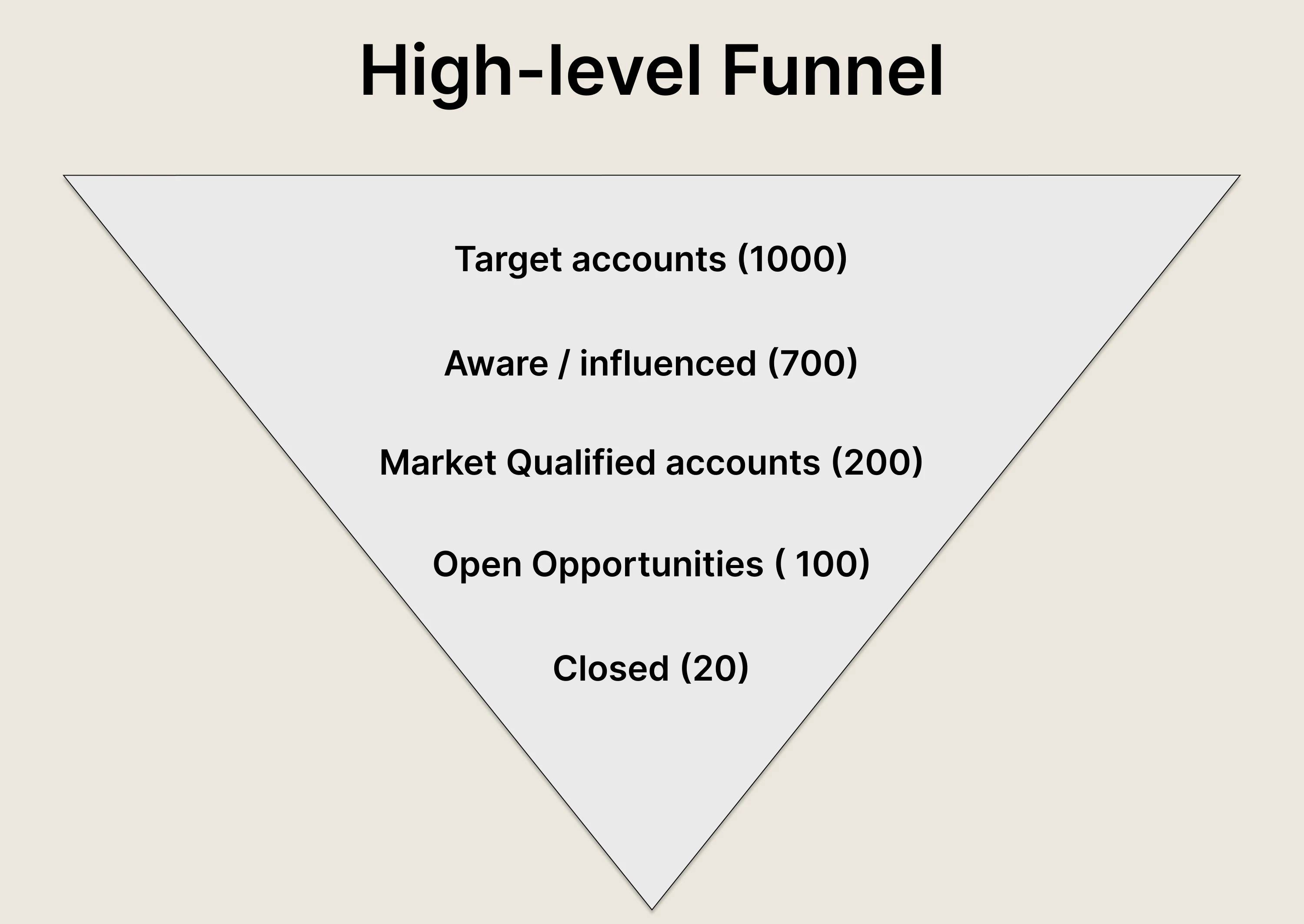 high level funnel
For the tracking part, you would need to combine UTM parameters with tools like Segment or Rudderstack to do identification everywhere possible where you deal with known accounts.
Wether it’s to track from the ad platforms, website interactions (form submissions), links in email, you need to have a clear tracking plan and ensure you don’t miss any impactful prospect actions.
IP recognition tools tools like Clearbit Reveal, or Albacoss can be useful to identify anonymous targeted account arriving on your website.
Check this great DIY article by Dreamdata to learn more about the ABM funnel tracking.
How Cargo can help you systemize your ABM strategy #
As soon as you have your data in the warehouse, you can use cargo as the brain of your business operations: the main system that rules them all.
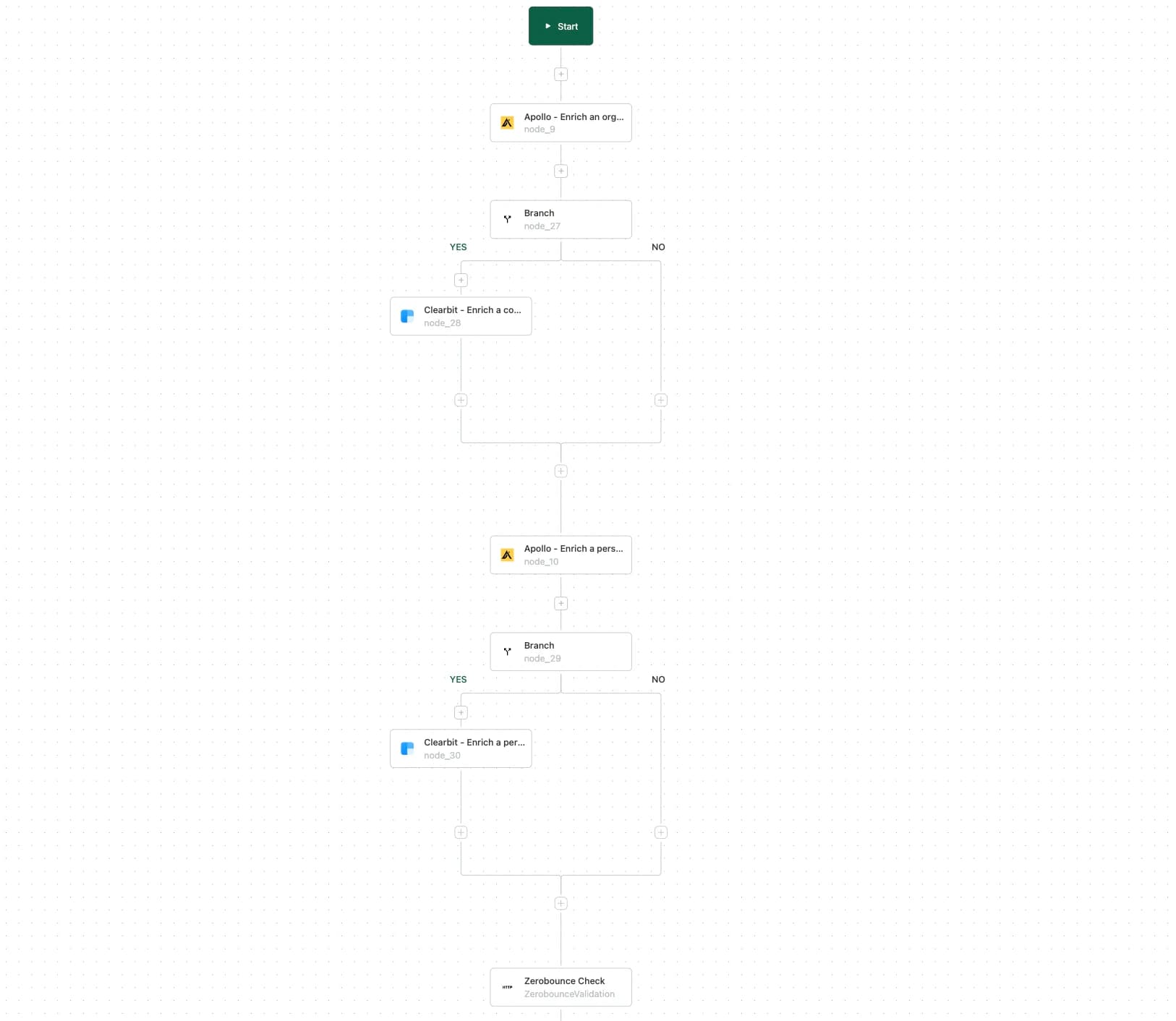
You can push create a segment both on account or people level, enrich them further, verify the data validity, score them based on fit, intent and behavioral attributes, push your segment into custom audiences, and trigger sales or marketing sequences based on their journey stage.
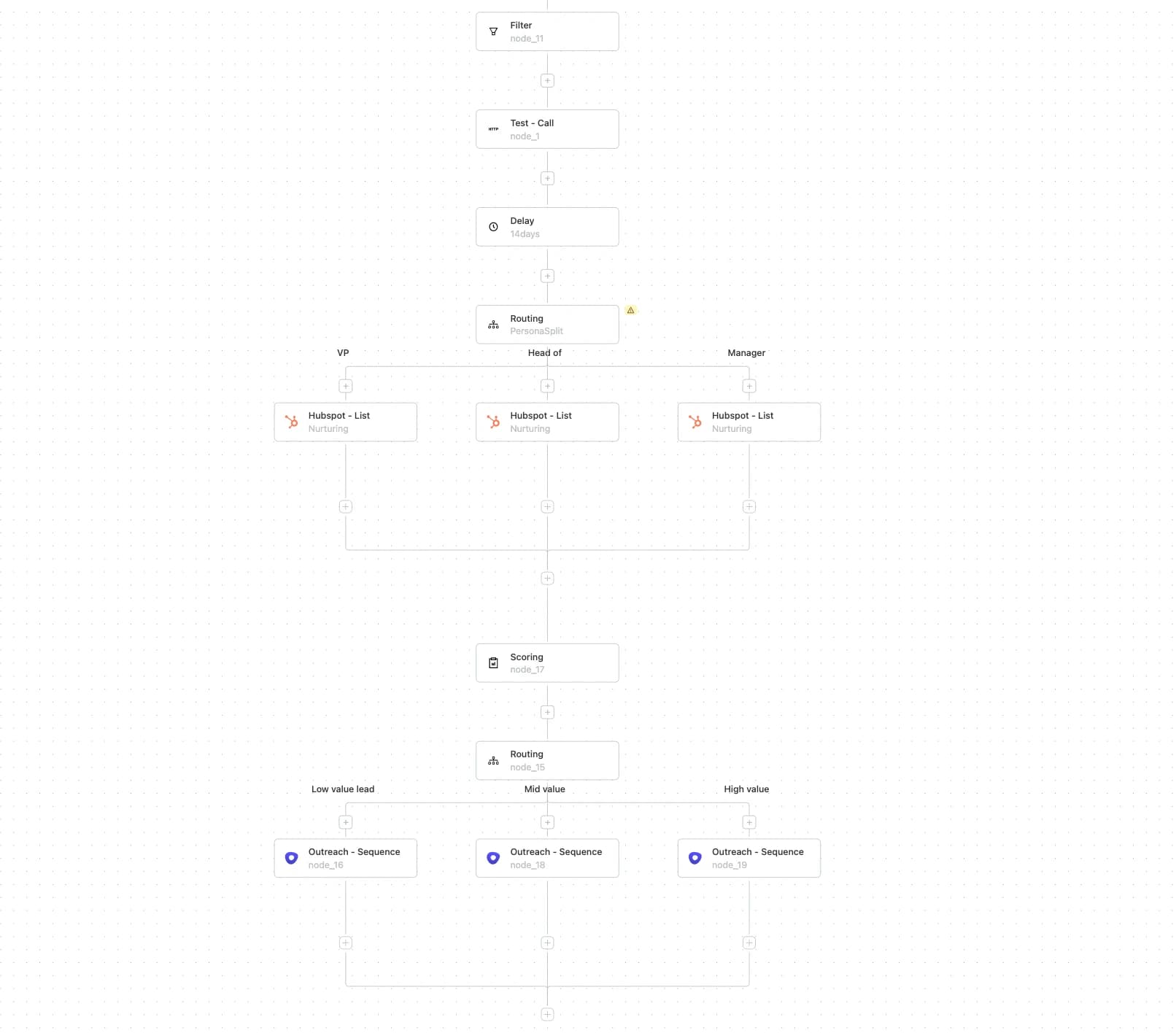
A simple 1:M ABX journey logic you could do:
-
Start: Targeted accounts
-
Enrich contact within the target accounts + use waterfall logic to maximize enrichment coverage of your leads
-
Verify email validity
-
Push them into Linkedin matched audience (company or contact matched audience)
-
Delay
-
Split by persona and push them to dedicated nurturing sequences, created for each stakeholders type (Key decision makers, Influencers, End users) but you could also do a split on industry for example.
-
Scoring based on available attributes (fit, behavior, intents)
-
Dedicated sales sequences based on the score to engage them accordingly (one to many vs high touch sequences)
-
Extra: You could eventually then having dedicated nurturing sequence based on the status of the deal (Timing, using competitors, Product needs like specific integrations)
Here is what it would look like visually:
 Cargo abx
 Cargo abx
Key Takeaways #
- ABX = “Allbound” strategy bridging inbound + outbound across full lifecycle: Traditional ABM was marketing-led; ABX involves sales, marketing, and CS collaborating to deliver cohesive account experiences from pre-sale through post-sale, 80% improve customer lifetime value, 76% increase win rates
- Four ABX tiers determine engagement level by deal size: 1:1 (hyper-personalized for strategic accounts, e.g., GumGum’s T-Mobile Batman comic), 1:Few (lightly customized for clusters sharing industry/pain points, e.g., Fullfunnel’s virtual summit generating 34 SQLs for $3K), 1:Many (programmatic automation with variables/intent personalization), DemandGen (inbound leads-first, not account-first)
- ABX requires TAM centralized in data warehouse for fit + intent + behavioral scoring: PRM architecture enables unified 1st/3rd party data access, score accounts on fit (ICP match), intent (G2 research, funding, hiring), behavioral (website visits, webinar attendance), only target 3-5% showing buying signals
- Multi-threading (4-10 stakeholders per account) is mandatory: B2B decisions involve buying committees (line of business, IT, procurement), single-threaded deals don’t close; triangulation (engaging 3+ stakeholders) increases win rates 3x, requires account mapping and multi-persona sequences
- ABX pilot first, scale second: Don’t go “all-in” immediately, run PoC with hybrid squad (marketing + sales + exec sponsor), 10-30 target accounts, SMART goals, dedicated Slack channel, test channels/assets/CTAs for 90 days, measure account-level coverage/awareness/engagement/impact, then expand after proving ROI
Frequently Asked Questions #
ABX (Account-Based Experience) evolves ABM from a marketing-led tactic to a cross-functional strategy where sales, marketing, and customer success collaborate to deliver cohesive experiences across the full customer lifecycle, not just pre-sale.
Key differences:
- ABM: Marketing-led, focused on pipeline generation
- ABX: Cross-functional ownership, focused on customer experience and lifetime value
Why “Experience” matters: The term signals that this isn’t just marketing’s job. ABX requires coordinated, multi-channel engagement across your entire revenue team, including post-sale delivery and expansion.
Impact: Companies using account-based strategies see 80% improvement in customer lifetime value and 76% increase in win rates.
Choose your ABX approach based on deal size and account volume:
1:1 ABX (Strategic Accounts)
- Best for: $500K+ ACV, 5-30 accounts
- Approach: Hyper-personalized, bespoke programs with dedicated account teams
- Example: GumGum created a custom Batman comic for T-Mobile’s CEO to prevent churn
1:Few ABX (Cluster-Based)
- Best for: $100K-$500K ACV, 30-500 accounts
- Approach: Customized campaigns for account clusters (by industry, size, or persona)
- Example: Fullfunnel’s virtual summit generated 34 SQLs and 5 customers for $3K
1:Many ABX (Programmatic)
- Best for: $10K-$100K ACV, 500-10,000+ accounts
- Approach: Automated sequences with dynamic personalization using variables and intent data
DemandGen
- Best for: < $10K ACV, lead-first motion
- Approach: Inbound channels (SEO, content, paid ads) to build awareness and capture leads
Most companies use a blended approach, routing accounts to the appropriate tier based on scoring and potential.
Never go “all-in” on ABX immediately. Start with a focused 90-day pilot:
Prerequisites:
- Define one clear objective (new logos, expansion, retention)
- Get executive sponsorship and budget ($10K-$100K)
- Align sales + marketing with shared metrics and co-ownership
- Set up account-level tracking (UTM parameters, BI dashboard, Slack alerts)
Pilot structure:
- Squad: 1 marketing lead, 1-2 sales reps, 1 RevOps, 1 exec sponsor
- Account volume: 10-50 accounts (1:1: 5-15, 1:Few: 20-50, 1:Many: 50-200)
- Timeline: 90 days minimum
- Focus: Learn which channels, messages, and tactics work
After 90 days: Measure results vs. goals. If successful, scale 2x. If mixed, iterate. If failed, diagnose and test one variable at a time.
Common mistakes: Judging too early (30 days), targeting too many accounts, single-threading, poor sales/marketing alignment.
B2B deals involve 4-10 decision makers. Single-threaded deals (only one contact) fail when that person leaves, can’t get budget approval, or faces internal blockers.
Multi-threading means engaging 3+ stakeholders:
- Economic buyer (CFO, CRO): Controls budget
- Champion (Director, VP): Internal advocate
- Technical buyer (CTO, RevOps): Validates integrations/security
- End users (Managers, reps): Day-to-day users
Why it works:
- Builds redundancy (if one person leaves, relationship persists)
- Enables consensus (all stakeholders aligned before internal meetings)
- Surfaces objections early (fix blockers before they kill deals)
- Shortens cycles (don’t wait for champion to “sell internally”)
Results: Multi-threaded deals (3+ stakeholders) have 40-60% win rates vs. 15-25% for single-threaded deals.
How to start: Use LinkedIn Sales Navigator and ZoomInfo to map org charts, then engage each stakeholder with persona-specific messaging.
ABX requires account-level tracking (not lead-level) because multiple contacts from the same company engage across different channels.
The 4-stage metrics framework:
1. Coverage: % of target accounts with 2+ validated contacts 2. Awareness: % of accounts that visited website, engaged with ads, or downloaded content 3. Engagement: % of accounts with 3+ touchpoints and 2+ stakeholders engaged 4. Impact: Pipeline $, win rate, deal size, and cycle time vs. non-target accounts
Implementation:
- Tag target accounts in CRM (“ABX_Pilot” field)
- Use UTM parameters on all campaigns
- Implement event tracking (Segment/Rudderstack) with account identifiers
- Use IP reveal tools (Clearbit, Albacross) for anonymous visitors
- Build account engagement table (dbt) to roll up all contact activities
- Create BI dashboard showing the full funnel
- Set up Slack alerts when accounts hit engagement thresholds
Attribution: Use time-decay or W-shaped models to credit multiple touchpoints across the buyer journey.
👉 Interested to learn more? Signup here and we’ll get you onboard